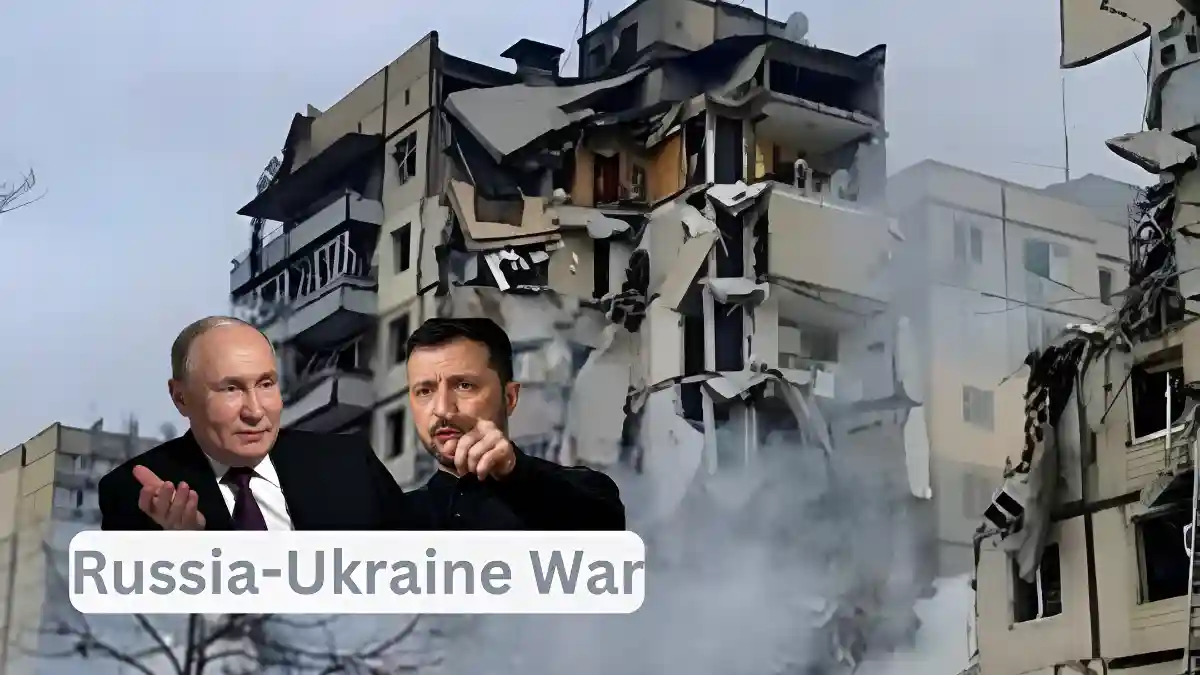
The ‘Russia-Ukraine war’ has once again taken a terrifying turn. On the night of November 8, 2025, Russia launched its largest airstrike to date on major Ukrainian cities, throwing the country into chaos. In this massive assault, Russian forces fired over 450 drones and 45 missiles, several of which struck key urban areas and energy infrastructure. According to official sources, at least seven people were killed, and dozens were injured in the attack.
The Most Destructive Night of the War
The Russian assault began around 11 p.m. when a series of explosions echoed across the skies of Kyiv. Videos shared on social media showed the night sky lit up as air defence systems worked relentlessly to intercept missiles and drones.
This time, Russia specifically targeted Ukraine’s energy and city infrastructure, plunging several regions into darkness. Reports indicate that Kyiv, Poltava, Kharkiv, and Dnipro were among the worst hit by the strikes.
City-by-City Devastation
In the capital Kyiv, a drone crash completely destroyed a residential apartment building. Three people were killed and twelve others injured in the incident, including children and the elderly. Rescue workers continued to pull survivors from the debris.
In Dnipro, a drone attack on a nine-storey building killed three more people. Hospitals in the city were overwhelmed with casualties, with local officials confirming that two of the eleven injured were in critical condition.
In Poltava and Kharkiv, missiles severely damaged power stations. One death was reported in Kharkiv, and power was cut off across several parts of the city. Similarly, in Zaporizhzhia and the Samarsky regions, strikes on energy facilities caused widespread blackouts.
Deepening Energy Crisis
Ukraine’s Energy Minister, Svitlana Hrynchuk, confirmed that multiple major power plants and grids were knocked offline by the Russian strikes. Kyiv and surrounding areas faced power cuts for up to eight hours, and in some places, electricity supply remains disrupted.
Energy companies Centrenergo and DTEK announced the temporary shutdown of several key plants, forcing the government to implement nationwide rolling blackouts.
Gas supply has also been severely impacted. The national gas company reported that this was the ninth attack on the gas transit system since October. Experts warned that the damage could cripple heating systems during the upcoming winter, leaving millions of people exposed to extreme cold.
Ukraine’s Counterclaim and Response
Ukraine’s Air Force claimed to have destroyed 406 drones and nine missiles mid-air. However, 52 drones and 26 missiles managed to hit their targets, causing widespread destruction.
A military spokesperson stated that Russia’s goal was to instil fear among civilians, disrupt energy supplies, and weaken Ukraine’s economic structure. Ukrainian air defence units remain on high alert, with Kyiv urging Western nations for additional advanced defence systems.
President Zelensky’s Strong Reaction
Ukrainian President Volodymyr Zelensky described the assault as “the most brutal and horrifying chapter of the war.” He said Russia was attempting to break the morale of Ukrainian citizens, but the people and armed forces would not back down.
In his address, Zelensky appealed to Western nations to impose fresh sanctions on Russia and to provide Ukraine with modern air defence systems. He warned that if the international community failed to take firm action now, Russian aggression would only intensify.
Russia’s Response and Claim
Russia’s Defence Ministry justified the attack as a “retaliatory action” against recent Ukrainian strikes. Moscow claimed that only military and energy infrastructure targets were hit to weaken Ukraine’s defence capabilities.
The ministry added that civilian harm was not intended, but that “defensive counteractions” by Ukraine had altered the trajectory of several explosions.
Darkness Across the Nation, Winter Fears Rise
Following the assault, much of Ukraine was plunged into darkness. Citizens are struggling without electricity or heating. Hospitals have switched to diesel generators, while homes and schools are battling the cold.
Local administrations warned that it could take at least 48 hours to fully restore power. Essential services are being prioritised for restoration in affected regions.
Rising Crisis and Diplomatic Tensions
The attack has not only triggered a major energy crisis but has also escalated geopolitical tensions. The European Union condemned Russia’s actions, saying new sanctions would be announced soon. Meanwhile, the US State Department stated it was considering additional support to boost Ukraine’s air defence capabilities.
The eastern front remains highly volatile, with continued exchanges of fire and missile attacks along the border regions. Political analysts say that without a renewed path to dialogue, this winter could prove disastrous for both nations.
Conclusion
The night of November 8 has been etched in Ukraine’s history as one of the most horrifying nights of the Russia-Ukraine war. Russia’s unprecedented assault has not only crippled Ukraine’s energy infrastructure but also brought daily life to a standstill. As Ukraine continues to look to the West for support, the war has clearly entered a new and more perilous stage.
Also Read