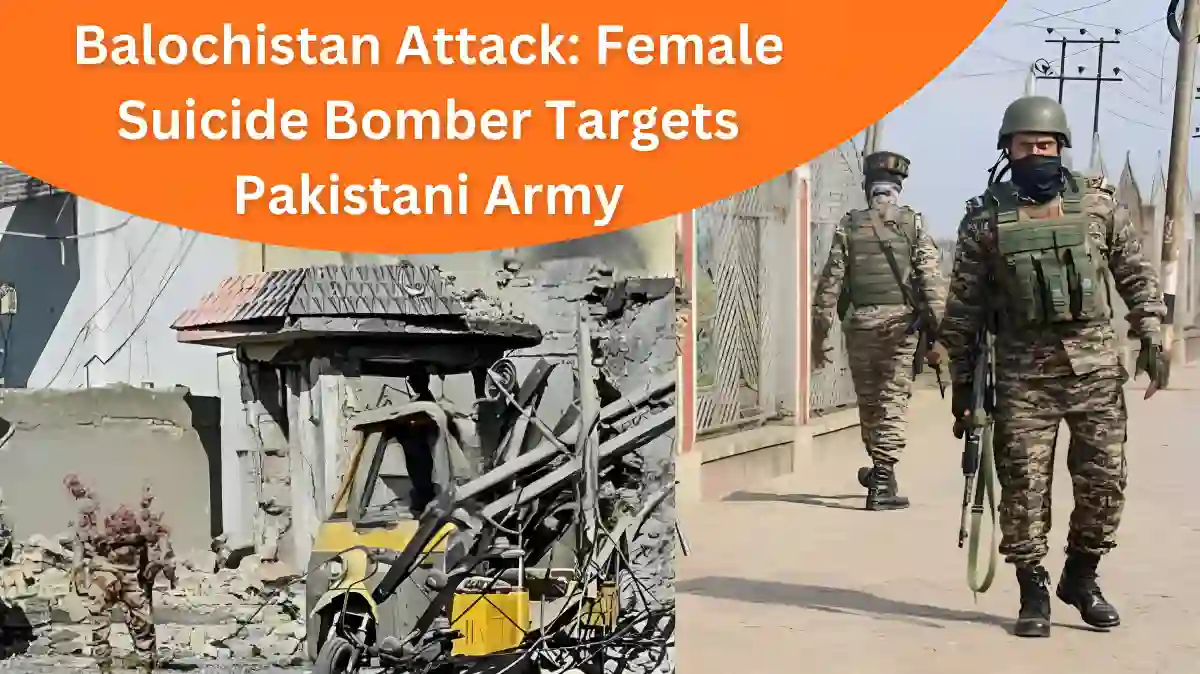
A major terror attack on Sunday night shook Pakistan’s Balochistan province, as gunfire and loud explosions echoed across the region following an assault on the Frontier Corps (FC) headquarters in Chaghi district. The incident has once again raised serious concerns about Pakistan’s internal security and the deteriorating security situation in Balochistan.
Female Suicide Bomber Detonates Explosive Device
According to local sources, around 8:30 PM, a female suicide bomber detonated an explosive device at the main entrance of the FC headquarters. The blast was so powerful that windows of nearby buildings shattered, and rounds of gunfire filled the air shortly after.
Following the explosion, approximately six to seven armed militants attempted to storm the compound. Security forces retaliated immediately, and an intense gunfight continued for nearly two hours. Three militants were reportedly killed during the firefight. A clearance operation remained underway, and authorities sealed the surrounding areas.
Balochistan Liberation Front Takes Responsibility
The Balochistan Liberation Front (BLF) claimed responsibility for the attack. In a statement, the group said the operation was carried out by its “Sado Operational Battalion.” The militants reportedly targeted the zone housing foreign workers connected to the Reko Diq and Saindak gold-copper mining projects.
The BLF warned that their campaign is not over and that more large-scale actions could follow. The group described the attack as “strategic resistance” against Pakistan’s foreign-backed economic projects. The organisation has long accused the government and military of exploiting Balochistan’s natural resources without benefiting the local population.
Emergency Declared, Injured Shifted to Hospitals
Hospitals across Chaghi district were placed under emergency following the attack. Several security personnel and civilians were reported injured, though Pakistan has yet to release official casualty figures. Internet services in parts of the region were temporarily restricted to prevent misinformation.
Strategic Projects Under Threat
Chaghi district is among Pakistan’s most strategically significant regions, home to the Reko Diq and Saindak mining projects, which hold substantial gold and copper reserves. These projects involve heavy foreign investment, including partnerships with Chinese and Canadian companies.
Experts believe the attack directly threatens the security framework surrounding these projects. Analysts say Baloch separatist groups have been consistently targeting areas with foreign industrial activity to weaken Pakistan’s economy and discourage global investment.
Security Agencies Alarmed by Rising Terror Activity
For security agencies, the incident serves as a major warning sign. Over the past 24 hours, Balochistan has reported multiple attacks, including IED blasts, ambushes, and firing on checkpoints — indicating a rapid rise in militant operations.
A source from Pakistan’s National Security Council revealed that Baloch insurgent groups have reorganised in recent months, adopting a decentralised structure of small combat units — making detection and tracking more difficult.
Second Attack in Panjgur, Militants Forced to Flee
Just hours after the Chaghi assault, another attack occurred at a security post in Panjgur district. Forces repelled the attack, and militants escaped. Security analysts believe both incidents may be part of a coordinated operational plan.
Foreign workers in Balochistan have been issued advisories to limit movement and strictly follow security protocols until further notice.
Pakistan’s Global Ranking Worsens
As per the 2025 Global Terrorism Index, Pakistan has been ranked the second most terrorism-affected country worldwide this year. The report underscores ongoing challenges despite counter-terror efforts.
Experts warn that repeated attacks highlight weaknesses in state strategy and could further undermine investor confidence amid Pakistan’s already fragile economic environment.
Rising Regional Tensions and Future Challenges
Baloch organisations have long demanded greater autonomy and control over regional resources. Groups argue that multibillion-dollar projects like Reko Diq belong to the local population, not national or foreign stakeholders.
The government maintains these projects are essential for national economic development. However, conflict on the ground has intensified, resulting in increasingly violent confrontations.
Groups such as the BLF and Balochistan Liberation Army (BLA) are now reportedly deploying advanced tactical methods, including the use of technically trained operatives — with women being included in operational roles for the first time. This shift poses a new challenge for security forces.
Conclusion
The Chaghi attack marks a significant escalation in the ongoing conflict in Balochistan. While Pakistan continues to pursue foreign-backed development and infrastructure plans, persistent insurgency and violent resistance threaten to undermine national security and economic stability.
Sunday night’s attack raises critical questions about Pakistan’s security preparedness and highlights the growing operational capacity of Baloch separatist groups. Moving forward, restoring stability in Balochistan will remain one of Pakistan’s most urgent and difficult challenges.
Also Read
- Trump’s Major Decision: US Closes Venezuelan Airspace, Is America Heading Towards War?
- Cyclone Ditwa Threatens Tamil Nadu, Puducherry and Andhra Pradesh
- Israel Calls Back Bnei Menashe Jews from Northeast India, Major Shift Expected in Five Years
- Trump’s ‘America First’ Policy Delivers Heavy Blow to F-35, Export Crisis Deepens