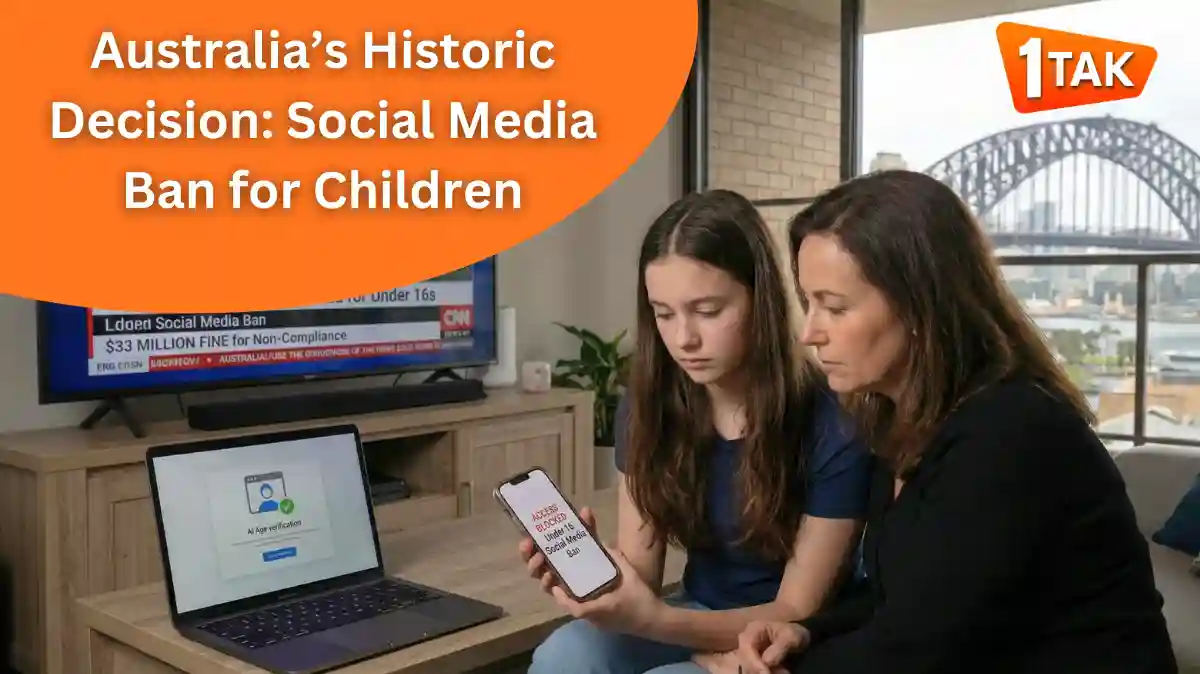
Australia Social Media Ban 2025 is set to become a reality. The world’s first law making it illegal for children under 16 to hold social media accounts will take effect from December 10, 2025. Even before the law comes into force, Meta has already acted — approximately 500,000 teenage accounts have been removed from Instagram, Facebook, and Threads.
AI-Based Age Verification Launched
Under this ban, the Australian government has directed platforms to verify users’ ages using AI-powered facial age estimation technology. Meta started this verification process on December 4. The company estimates users’ ages based on account creation dates, user activity, and connection data. If an account is mistakenly removed, users can prove their age through government ID or a video selfie to regain access.
Heavy Fines and Strict Rules
Under the new law, companies violating the regulations could face fines of up to 50 million Australian dollars. Every social media platform will now be required to report monthly to the eSafety Commissioner on how many underage accounts have been disabled. Government estimates suggest that over 1 million accounts could be affected, including 350,000 on Instagram and 150,000 on Facebook.
Long List of Affected Platforms
The ban is not limited to Meta. Platforms on the list include Facebook, Instagram, Threads, TikTok, Snapchat, YouTube, Reddit, Twitch, Kik, and X (formerly Twitter). The government has stated that the list will remain “dynamic,” with more apps added if needed to prevent children from bypassing the rules by switching platforms.
Government Strictness and Legal Challenges
Meta has already carried out large-scale account lockdowns and halted new sign-ups. The eSafety Commissioner is preparing to issue notices to 10 platforms from December 11. Meanwhile, some teenagers have challenged the law in the High Court, but no hearing date has been set yet, keeping the December 10 schedule intact.
Child Safety or Attack on Digital Freedom?
The government claims the move aims to protect children from cyberbullying, misinformation, body image issues, and harmful content. UNICEF and other child protection organizations have praised the step. However, groups like the Digital Freedom Project argue that it is akin to curbing freedom of expression.
Also Read