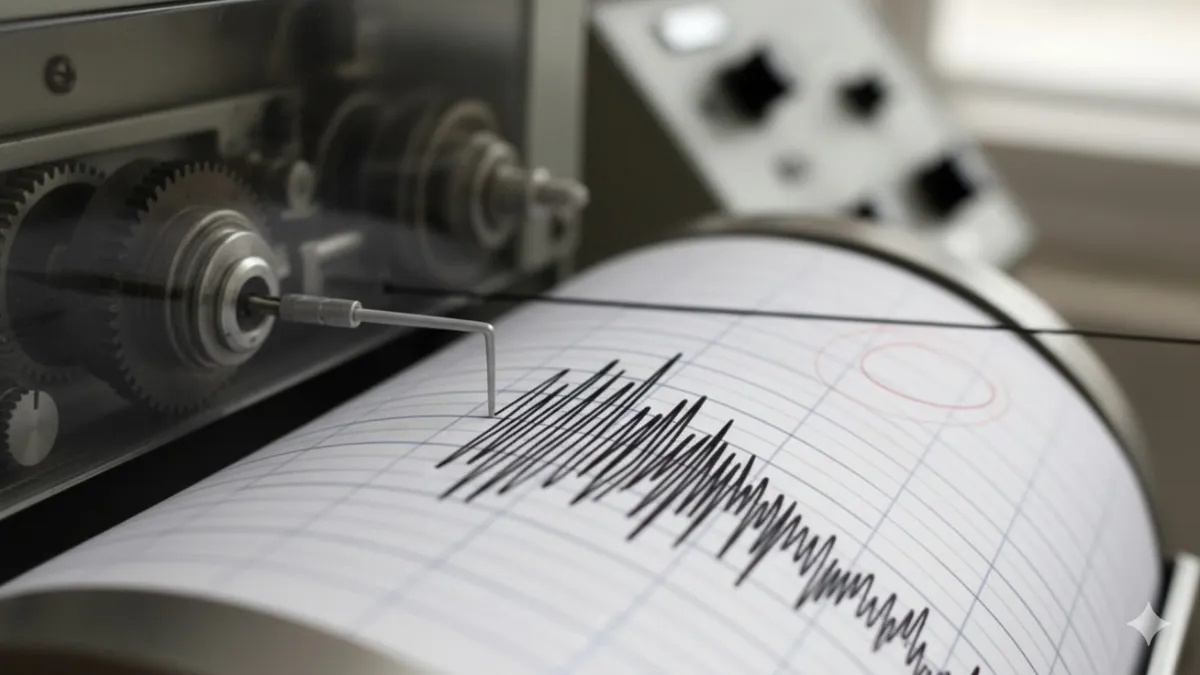
Northeastern Japan once again experienced intense seismic activity on Monday night. At around 11:15 p.m. local time, a powerful 7.6-magnitude earthquake struck, shaking Aomori Prefecture and surrounding regions. According to the Japan Meteorological Agency (JMA), the epicenter was located in the Pacific Ocean, roughly 80 kilometers off the Aomori coast at a depth of 50 kilometers.
The tremors were strong enough to be felt as far as Tokyo, where buildings reportedly shook for nearly 30 seconds. Several areas experienced power disruptions shortly afterward, and services on local trains, high-speed Shinkansen routes, and metro networks were halted immediately.
Tsunami Warnings and Panic Across Coastal Areas
Moments after the quake, the JMA issued a tsunami alert, warning of potential waves up to 3 meters high. This triggered the evacuation of over 90,000 residents from coastal regions of Aomori, Iwate, and Hokkaido. Police units, the Self-Defense Forces, and local authorities carried out coordinated evacuation operations.
After midnight, Kuji Port and nearby coastal zones recorded waves between 40 and 70 centimeters, though experts cautioned that sea levels could rise again. Sirens were activated across coastal towns, and local television channels interrupted programming to urge people to move to higher ground.
Epicenter and Intensity of the Tremors
The Japan Meteorological Agency reported that the strongest shaking was recorded in Hachinohe, where tremors reached 6+ on the Shindo scale—the second-highest level on Japan’s seven-tier system. This intensity is considered severe enough to cause significant structural damage in affected areas.
The U.S. Geological Survey (USGS) confirmed that the earthquake resulted from thrust faulting, indicating the release of energy as tectonic plates pushed against each other.
Immediate Aftermath
Shortly after the quake, panic spread across the Tohoku region. Several cities reported widespread power outages, along with interruptions to mobile networks and internet services. Emergency response teams quickly began rescue and relief operations.
Reports indicated fire incidents in parts of Aomori and Iwate, while in Hachinohe, collapsing walls in a hotel injured six to seven people, who were later taken to nearby hospitals. In another incident, a man driving through Tohoku fell into a sinkhole with his vehicle but was safely rescued.
Government officials confirmed that no fatalities have been reported so far, though minor property damage occurred. Train services, including the Shinkansen line from Fukushima to Aomori, were suspended, and several expressways were temporarily closed.
Late-Night Press Conference: ‘Protecting Lives Is Our Top Priority’
Prime Minister Sanae Takaichi immediately formed an emergency task force, directing all relevant ministries to accelerate rescue and recovery efforts. In a late-night press conference, she stated, “Our top priority is the safety of every citizen. The local administration and Self-Defense Forces are working together to expedite relief operations.”
The government also instructed the Energy Ministry to verify safety at the Higashidori and Onagawa nuclear power plants, ensuring there were no radiation leaks or technical issues. Authorities later confirmed that no abnormalities were detected at any facility.
Echoes of 2011
The quake struck the Sanriku region, the same area devastated by the catastrophic 9.0-magnitude earthquake and tsunami in 2011. That disaster claimed more than 20,000 lives and triggered the Fukushima nuclear crisis.
Experts note that northeastern Japan lies in a highly active seismic zone along the “Ring of Fire”, where minor tremors occur every few minutes. This latest earthquake once again underscores Japan’s vulnerability despite being one of the most disaster-prepared nations in the world.
Aftershocks and Ongoing Relief Efforts
Multiple aftershocks were recorded between late December 8 and early December 9. At around 4:30 a.m., a 5.5-magnitude tremor prompted residents to rush outdoors once again. Authorities have urged citizens to stay away from coastal areas until further notice.
According to NHK reports, no major structural collapses have been identified, though power restoration and road repair work remain underway. Emergency vehicles and fire crews continue round-the-clock operations across affected districts.
Morning of December 9: Danger Eases, Vigilance Continues
By the morning of December 9, the tsunami warning was officially lifted, though officials emphasized that fluctuating tides and potential aftershocks require heightened caution for the next 48 hours.
Schools in Aomori and Iwate will remain closed on Tuesday, while train services are gradually being restored. International media outlets continue to monitor updates closely.
Technology and Community Preparedness
Experts believe Japan’s advanced early warning systems and evacuation protocols played a crucial role in preventing large-scale destruction. Early JMA alerts allowed coastal residents to move to safety in time, potentially saving thousands of lives.
In recent years, Japan has also adopted AI-driven tsunami forecasting and disaster management systems, which helped authorities respond faster during this event through real-time sensor data and machine learning models.
Conclusion
Japan has once again demonstrated how preparedness, discipline, and advanced technology can minimize the impact of severe natural disasters. Rapid evacuations and swift action by government agencies helped prevent this 7.6-magnitude earthquake from turning into a major catastrophe.
Although experts warn that strong aftershocks may continue in the coming week, the country appears to be recovering steadily — proving once more that Japan stands resilient in the face of nature’s challenges.
Also Read