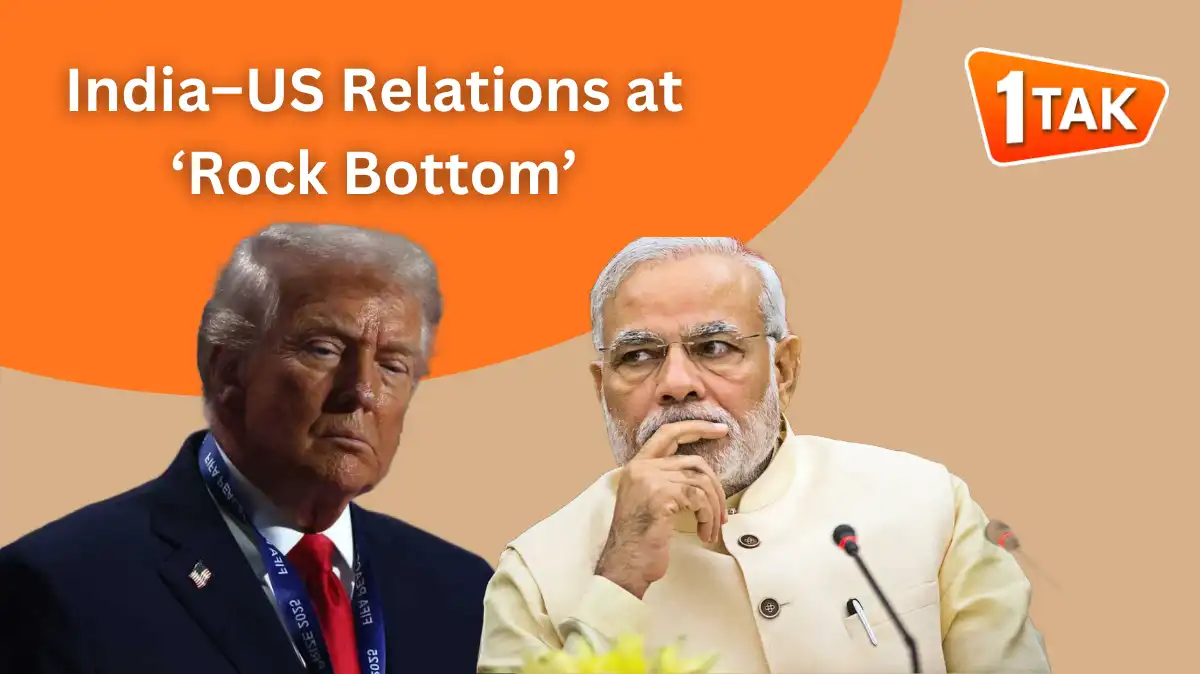
The year 2025 may go down in the history of India–US Relations as one of the weakest phases, when trust, strategic balance and the spirit of partnership between the world’s two largest democracies touched their lowest point. In the words of Aparna Pande, Senior Fellow for Foreign Policy at the Hudson Institute, this phase can be described as “almost rock bottom.”
According to her, the relationship has become less strategic and increasingly “transactional” — focused on deal-making and short-term gains rather than long-term alignment.
Where the India–US partnership was once seen as a cornerstone of “global stability” and the “Indo-Pacific strategy,” Washington now appears to be viewing India through a “deal-by-deal” lens, similar to other countries. Experts believe this shift is not merely a temporary policy disagreement, but one that has shaken the foundation of trust built over the past three decades.
Tariff War Deepens Distrust
The year began on a hopeful note. In February 2025, expectations of a “new phase of partnership” emerged following a meeting between Prime Minister Narendra Modi and US President Donald Trump. However, within months, the situation took a dramatic turn.
From August, the US administration imposed 25% “reciprocal” tariffs and an additional 25% penalty on Indian exports, pushing the total tariff burden to 50%. The move was widely linked to India’s continued oil and defence purchases from Russia.
According to international institutions and BBC reports, if these tariffs persist for an extended period, they could result in a GDP contraction of up to 0.8% for India. Indian exports — particularly textiles, pharmaceuticals and engineering goods — were already facing intense competition in the US market.
Policy analysts argue that the Trump administration’s approach of viewing every relationship purely through the lens of profit has stalled the long-term strategic understanding between the two countries.
Cold Diplomacy, but Working-Level Engagement Continues
In 2025, high-level diplomacy between India and the US remained largely stagnant.
There were no major joint declarations, no significant high-profile visits, and several bilateral dialogues were postponed or cancelled at the last moment. This had a direct impact on top-level political trust.
However, not all channels were closed. Cooperation continued in areas such as humanitarian assistance, disaster management, maritime security, defence coordination and counter-terrorism operations. These areas now form the “working base” on which hopes for improvement in 2026 are being pinned.
Aparna Pande believes that as long as professional, ground-level engagement continues, the relationship cannot completely break down. This working engagement could eventually lay the groundwork for a fresh political thaw.
Pakistan Factor: Washington’s New ‘Geopolitical Calculation’
One of the most complex elements adding to the strain in India–US relations in 2025 was the unexpected re-emergence of the Pakistan factor.
A sudden softening in US–Pakistan ties has caused unease in New Delhi. Washington has begun acknowledging Pakistan’s “positive role” in energy cooperation, security and counter-terrorism engagement.
Several think tanks have termed this shift a “Pakistan pivot.” While the relationship has not returned to Cold War-era depth, it signals a change in US priorities.
India argues that this was not the moment to “reward” Pakistan — especially at a time when cross-border terrorism incidents have shown signs of resurgence.
Strategic experts view this as a serious diplomatic setback for India, particularly when New Delhi was expecting clearer US support on Kashmir and security-related issues. Instead, Washington opted for a balancing approach.
Russia, Oil and Visa Policies Add to the Strain
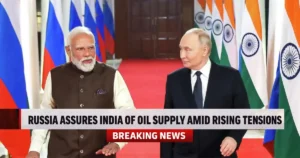
One of Washington’s biggest points of contention has been India’s continued energy and defence purchases from Russia.
The US views dependence on Russia as a threat to global security, while India considers it an essential component of its long-standing strategic autonomy.
This disagreement directly influenced tariff policy, with the US linking India’s Russian purchases to tariff penalties, further intensifying commercial tensions.
Additionally, stricter rules and higher fees for H-1B and other work visas have increased concerns among Indian technology professionals.
Some reports suggest this could negatively affect the hiring of Indian IT talent and their presence in the US.
This is particularly significant because technology collaboration has long been one of the strongest pillars of India–US relations — and is now under pressure.
Hopes for 2026: Beginning of Recovery or a New Phase?
Despite the difficult circumstances, experts are not entirely pessimistic. According to Aparna Pande, “Every phase of stagnation has a limit, and this pause in India–US relations is not permanent.”
Clear possibilities are emerging for 2026, provided both sides move forward on key fronts:
- Tangible progress on an India–US trade deal.
- A renewed leadership-level summit.
- Steps by India towards labour reforms, liberalisation in the insurance sector, and greater transparency in the nuclear liability framework.
If positive momentum builds in these areas, 2026 could be seen as a turning-point year after the bitterness of 2025.
The Window of Opportunity Remains Open
Analysts believe that the future direction of India–US relations will depend on whether Washington once again recognises India as a strategic partner.
If contentious issues such as Russia, Pakistan and tariffs are managed under the principle of “managed differences,” the two democracies could return to the centre of the global order.
Also Read
- A New Turn in Ukraine Russia Peace Talks: Russia Backs EU Membership, Ukraine Ready to Drop NATO Bid
- Russia Ukraine War: Putin’s Stern Warning — “If Peace Talks Fail, Moscow Will Push Its Military Advantage Further”
- US–UK $40 Billion “Tech Prosperity Deal” Suspended
- Gaza Conflict: Israel Kills Hamas Commander Raed Saad in Airstrike