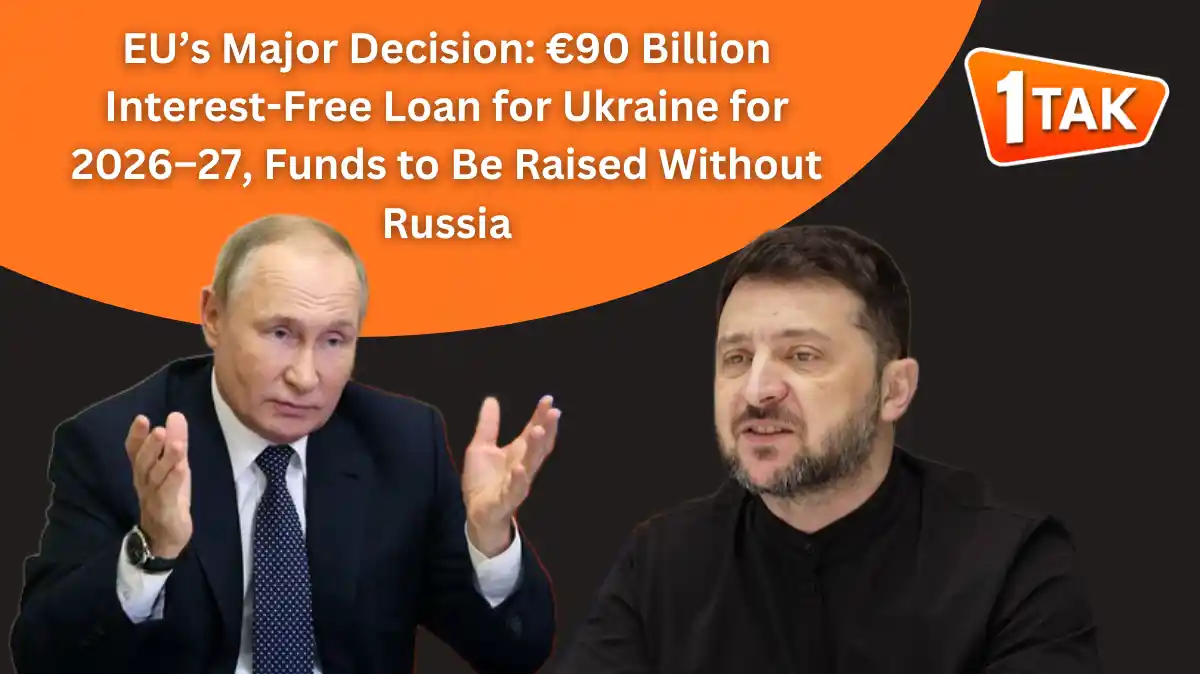
Europe has once again taken a significant step to support war-torn Ukraine. On Friday, the European Union (EU) approved an interest-free loan of €90 billion (approximately $105 billion) for Ukraine for the period 2026–27. The decision was taken after a two-day high-level summit in Brussels, which experts are describing as a “historic example of European unity.”
The key feature of this package is that the funding will not come from frozen Russian assets, but will instead be raised directly from the European capital markets.
Ukrainian President Volodymyr Zelenskyy described the decision as one that strengthens Ukraine’s defence capabilities and economic stability. He said the assistance would “reinforce our resilience and mark a concrete step toward future reconstruction.”
Consensus Reached After Intense Negotiations
The agreement was not easily achieved. During the marathon meeting of the European Council held from December 18 to 19, several countries raised objections to the proposed funding model. The initial plan was to finance Ukraine using interest or profits generated from frozen Russian assets, estimated to be worth around €210 billion.
However, Belgian Prime Minister Bart De Wever opposed the idea, citing legal complexities and the risk of possible retaliatory measures from Russia.
As a result, a new pathway was agreed upon. Under Article 20 of the European treaties, the EU itself will borrow €90 billion from capital markets. The loan will be interest-free and disbursed to Ukraine between 2026 and 2027 to cover military salaries, pensions, healthcare services, energy infrastructure repairs, and reconstruction of war-affected regions.
Zelenskyy: ‘This Is Our Security Shield’
Ukrainian President Volodymyr Zelenskyy welcomed the decision on social media platform X (formerly Twitter) and during a press conference in Warsaw. He said, “This financial assistance is not only economic, but strategic. It strengthens both our defence and reconstruction capacities.”
Zelenskyy added that if the war with Russia continues, the funds will primarily be directed toward defence spending. If hostilities decrease, the focus will shift to reconstruction and infrastructure restoration. He also expressed hope that Russia would eventually be required to pay up to €600 billion in war reparations.
European Leaders Reaffirm Unity
Announcing the decision, European Council President Antonio Costa said, “We made a promise, and now we have delivered. Europe stands with Ukraine.”
German Chancellor Friedrich Merz said the package was approved by consensus and would serve as a “strong foundation for Ukraine’s military and economic stability.”
French President Emmanuel Macron described the move as “the most practical and legally secure option.”
Meanwhile, Hungarian Prime Minister Viktor Orbán, who has long expressed discomfort with EU sanctions against Russia, said he ensured that Russian assets would not be used in this arrangement so that “Hungarian taxpayers and families are not placed under additional burden.”
Russian Assets Remain at the Center of the Dispute
At present, Belgium-based financial institution Euroclear holds nearly €180 billion in frozen assets belonging to Russia’s central bank. The European Commission had intended to use part of the interest or returns generated from these assets to support Ukraine.
However, the Belgian government made it clear that doing so could prompt Russia to file a case in international courts.
Under the newly adopted model, Russian assets will remain “untouched” for now. Nevertheless, the EU has clearly indicated that Russia will ultimately be responsible for repaying this loan once the war ends. If Russia refuses to pay, the frozen assets could be transferred to Ukraine under international law.
Economic Impact and Financial Challenges
According to the International Monetary Fund (IMF), Ukraine’s financial needs for 2026–27 are estimated at around €137 billion. The EU’s new package will cover nearly two-thirds of that requirement. The remaining funding is expected to come from contributions by the United States, the United Kingdom, Canada, and several Asian partners.
Within the EU itself, the decision will have wide-ranging financial implications. During the Covid-19 pandemic, the EU borrowed €750 billion to finance its recovery package. Now, once again, it is turning to large-scale borrowing. European financial experts say this move will be “the next major test of Europe’s financial unity.”
While Hungary, Slovakia, and the Czech Republic have opted out of directly participating in the borrowing process, the EU is providing them with financial safeguards to ensure they are not exposed to any direct risk.
> (Information based on reports)
Also Read
- Russia Ukraine War: Putin’s Stern Warning — “If Peace Talks Fail, Moscow Will Push Its Military Advantage Further”
- US–UK $40 Billion “Tech Prosperity Deal” Suspended
- A New Turn in Ukraine Russia Peace Talks: Russia Backs EU Membership, Ukraine Ready to Drop NATO Bid
- Russia’s Largest Energy Strike on Ukraine So Far: Odesa and Southern Regions Worst Hit