
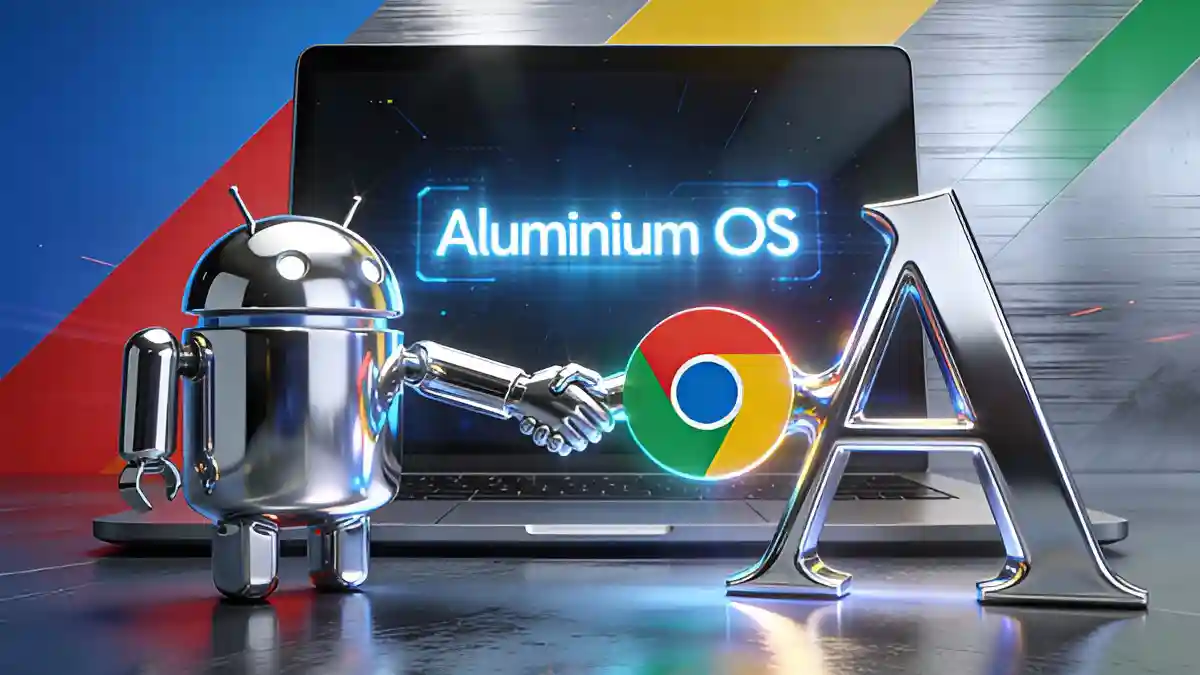
A major and historic shift is about to take place in the world of technology. Reports and industry leaks that have surfaced up to December 29, 2025, have confirmed that Google is preparing to bid farewell to its two-decade-old ChromeOS. The company is now working on an entirely new, modern, and unified platform, named Google Aluminium OS.
This is not just an update, but a strategic move by Google, designed to directly challenge Apple’s macOS and Microsoft’s Windows ecosystem. Google Aluminium OS is expected to strike a fine balance between Android’s flexibility and ChromeOS’s security, potentially transforming the overall desktop computing experience.
What is Google Aluminium OS? A New Beginning
According to technical analysts, Google Aluminium OS is Google’s ambitious project aimed at bridging the gap between Android and ChromeOS. Until now, Google has managed Android for mobile devices and ChromeOS separately for laptops and desktops. With Google Aluminium OS, the company is set to implement its “One Google” philosophy.
Reports suggest that this new operating system will be based on the architecture of Android 17. Its codename, “Aluminium,” follows Google’s long-standing tradition of naming projects after elements (such as Chromium and Vanadium). The primary goal is to create a hybrid OS capable of delivering powerful performance across tablets, foldable phones, and high-end laptops alike.
Why Was Aluminium OS Needed?
- Unified Ecosystem: To compete with Apple’s seamless integration between iPadOS and macOS, Google needed a single, unified platform.
- Tablet and Desktop Convergence: Android tablets have improved significantly in hardware, but the software experience still falls short of true desktop productivity. Google Aluminium OS aims to bridge this gap.
- Rising AI Demand: The future is AI-centric, and integrating AI at the root level is far easier in a newly designed OS than in an aging architecture like ChromeOS.
Key Features of Aluminium OS: What Makes It Special?
Based on leaked internal testing reports and discussions within the developer community, Google Aluminium OS may introduce the following breakthrough features:
1. Deep Integration of Gemini AI
AI will be the biggest highlight of this new OS. Google’s Gemini models are expected to be integrated at the kernel level within Google Aluminium OS. The system will not just respond to commands, but will be predictive in nature.
“For example, the OS will understand a user’s workflow. If you are editing a video, it will automatically freeze background apps and allocate maximum power to the editing software—without requiring any manual command.”
2. Free-Form Desktop Windowing
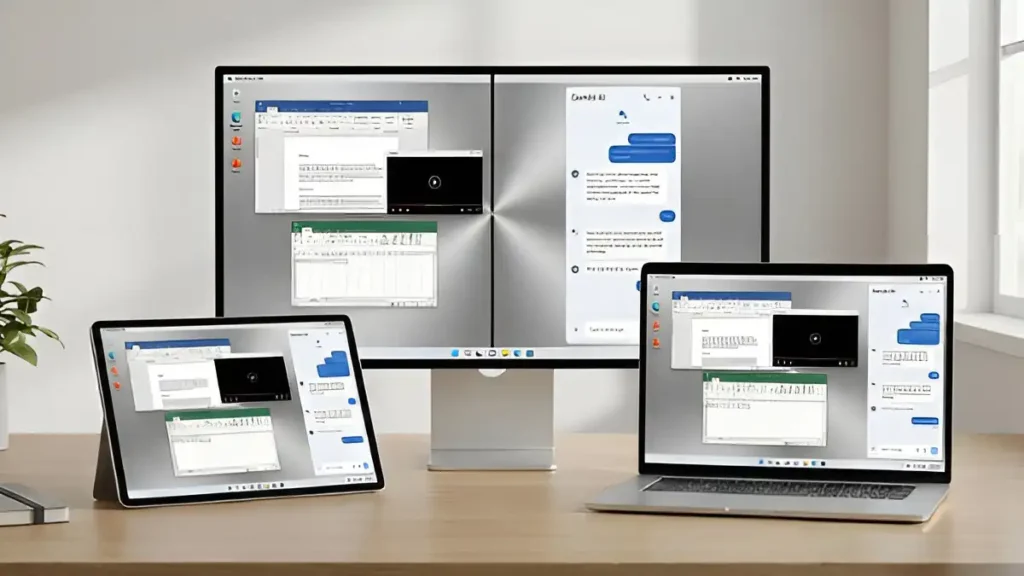
Multitasking has often been a weak point for Android. Google Aluminium OS is expected to introduce a fully developed desktop windowing system. Users will be able to open multiple apps in floating windows, resize them freely, and work across multiple monitors—similar to Samsung DeX or Windows.
3. Native Android Apps and Linux Support
On ChromeOS, Android apps require containers or emulation, which can slightly impact performance. Since Google Aluminium OS is built directly on Android, all apps will run natively, resulting in significant improvements in both performance and battery life. Additionally, Linux terminal support for developers is expected to remain intact.
Hardware Ecosystem: Three Distinct Tiers
Analysts believe that Google will exercise tighter control not only over software but also hardware this time. Devices running Google Aluminium OS may be categorized into three segments:
| Tier (Category) | Target Audience | Expected Specifications |
|---|---|---|
| AL Entry Series | Students and basic home users | MediaTek Kompanio chips, long battery life, cloud-first approach. |
| AL Mass Premium | Professionals and office users | Snapdragon X Plus or mid-range Intel chips, improved displays. |
| AL Premium | Creators and power users | Snapdragon X Elite, high refresh rate screens, build quality aimed at competing with the MacBook Pro. |
Launch Timeline: Eyes on Google I/O 2026
So far, Google has not officially announced any dates, but the industry roadmap offers clear indications.
- Announcement: The first official teaser or announcement of Google Aluminium OS is highly likely at Google I/O 2026 (May 2026).
- Availability: New devices could hit the market in the second half of 2026 (Q3 or Q4).
- Future of ChromeOS: There is no need to worry. ChromeOS will not be discontinued immediately. Google is expected to place it in “maintenance mode” and continue providing security updates for several years, allowing enterprise and education sectors to transition gradually.
Challenges and Conclusion: Will It Be a Game-Changer?
The road ahead for Google Aluminium OS will not be easy. Microsoft Windows has a deep foothold in the corporate world, and Apple’s ecosystem remains extremely strong. Google’s biggest challenge will be convincing developers to optimize Android apps for larger screens such as laptops and desktops.
However, if Google successfully leverages its Gemini AI capabilities and the massive Android user base, Google Aluminium OS could mark a new chapter in the history of personal computing. It may become an ideal choice for users who want smartphone-like simplicity combined with laptop-level productivity in a single device.
Time will tell whether Google Aluminium OS can bring to the laptop world the same kind of transformation that Android once brought to smartphones.
What’s the Next Step?
Would you like us to keep you updated with every major and minor leak related to the development of Google Aluminium OS as soon as it surfaces? Let us know in the comments which feature you are most excited to see in this new OS.
Also Read