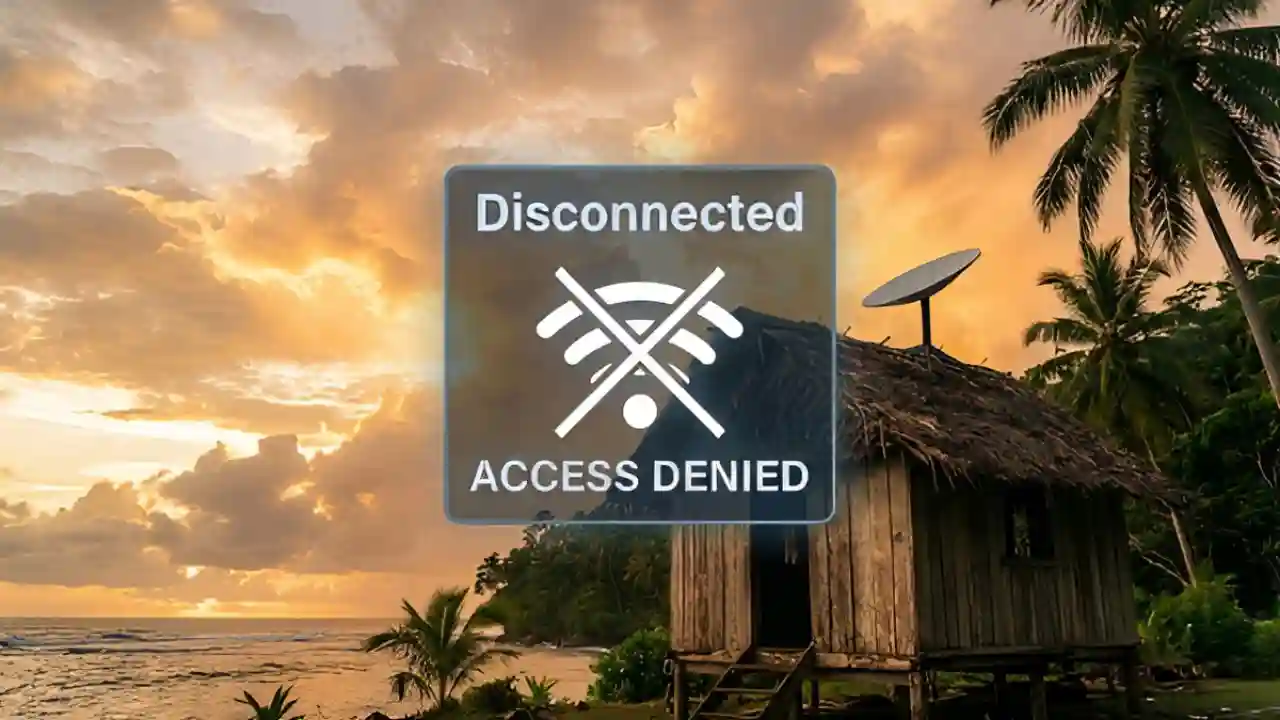
The company led by Elon Musk, which claims to bring a digital revolution to island nations in the Pacific Ocean, has suffered a major setback. Reports of Starlink Service Suspended in Papua New Guinea have created a stir in the global tech world. The country’s telecom regulatory authority, NICTA (National Information and Communication Technology Authority), has taken strict action and immediately suspended all Starlink services.
This issue is not just about internet services being shut down in one country, but a major example of the ongoing tug-of-war between global satellite internet companies and national sovereignty.
Why was such a major action taken against Starlink?
According to reports, Starlink services in Papua New Guinea (PNG) have been completely down since December 16, 2025. The main reason behind this ‘blackout’ is a regulatory compliance and licensing dispute. NICTA has clearly stated that the company was operating ‘illegally’ in the country.
- Questions over license validity: The regulator alleges that Starlink was providing services without a valid license, which violates the local telecom act.
- Ombudsman Commission intervention: This dispute did not arise overnight. Since March 2024, the Ombudsman Commission had put a halt on Starlink’s licensing agreement.
- National security and data: The commission raised serious concerns regarding Starlink’s data security, national interest, and fair competition in the market.
“The importation, installation, or use of any Starlink terminal in Papua New Guinea without a license is illegal. Violators may face heavy fines.” – NICTA Warning
Impact on users
A country like Papua New Guinea, known for its geographical challenges (mountains and islands), found satellite internet nothing less than a boon. Traditional fiber cables cannot reach everywhere, so Starlink’s network had become a lifeline.
After this ban:
- Education sector: Online education in rural schools has come to a halt. Teachers say they are struggling to download study materials.
- Healthcare: Remote community health centers that relied on high-speed internet for telemedicine are now cut off.
- Business community: Small traders and e-commerce businesses connected to global markets are suffering heavy losses.
Starlink’s stance and the global satellite internet equation
Amid the controversy, Starlink has assured its users that it remains committed to restoring services. The company argues that its Low-Earth Orbit (LEO) satellites technology is crucial for disaster management and connectivity.
Global pricing and market position
To understand the Starlink controversy, it is important to look at its global price structure. Starlink is generally considered a premium service:
- Hardware cost: Globally, the standard kit costs around $599 (approximately ₹50,000).
- Subscription plan: The monthly service fee is around $120 (approximately ₹10,000), which may vary by country depending on purchasing power.
Despite being expensive, demand is high in countries like PNG because there are no real alternatives. After the volcanic eruption in Tonga, when everything was destroyed, Starlink was the one that restored connectivity.
Government stance and the court battle

The Papua New Guinea government has taken a cautious approach on this issue. Communications Minister Timothy Masiu adopted a “no comment” policy, stating that the matter is sub judice.
However, experts believe this is a battle of traditional telecom vs space internet. Local telecom companies do not want a foreign company to capture market share by offering satellite-based services without heavy infrastructure investment. It is also being framed as an issue of market monopoly and a level playing field.
What lies ahead?
- Scenario A: If Starlink receives approval, NICTA may issue a license with revised conditions.
- Scenario B: If the ban continues, it will further deepen the digital divide and send a negative signal to global tech companies.
Also Read