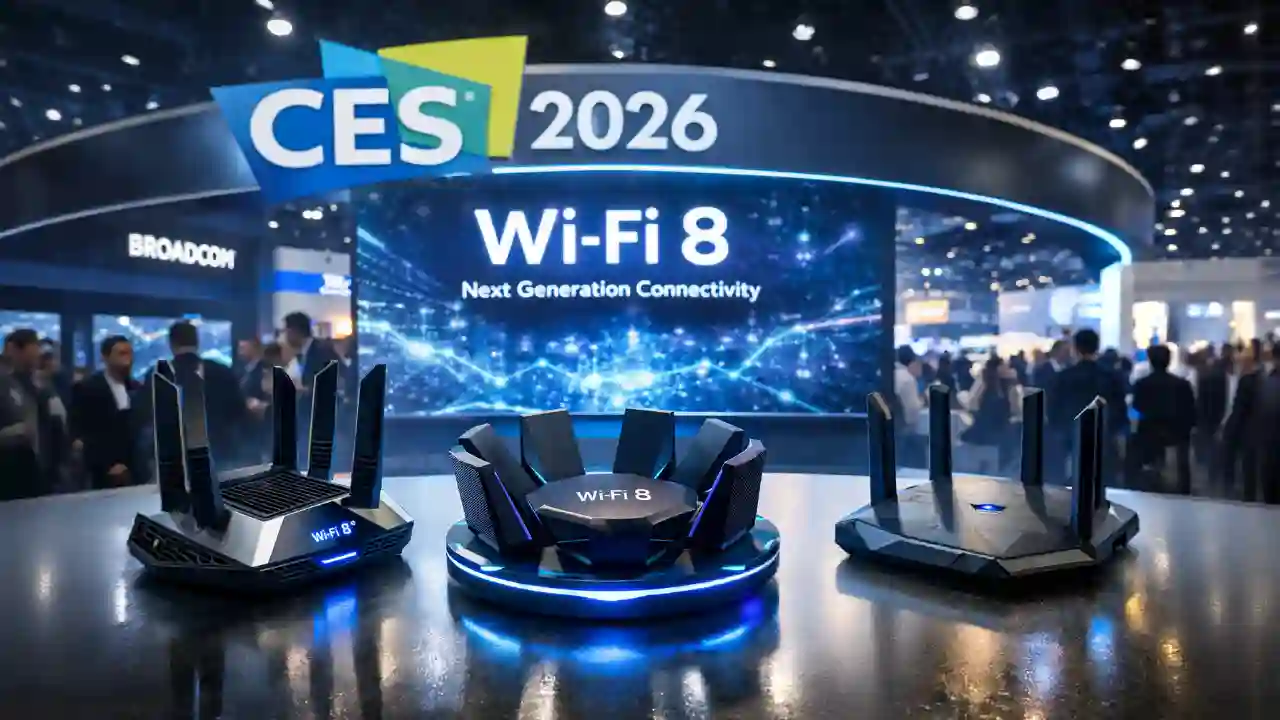
The CES 2026 event in Las Vegas has sparked a fresh debate in the tech world. While the world is still trying to fully adopt Wi-Fi 7, the future tech—Wi-Fi 8—has made its first solid appearance. It’s not just about boosting internet speeds; it’s about revolutionizing how our devices connect with each other.
Based on the IEEE 802.11bn standard, Wi-Fi 8’s main goal isn’t ‘Raw Speed’ but ‘Ultra High Reliability.’ In this article on 1Tak, we’ll dive deep into the technical aspects of Wi-Fi 8 showcased at CES 2026, the preparations by major brands, and its impact on everyday users.
Wi-Fi 8: The Technical Foundation and New Perspective
Wi-Fi 8 is being developed under the IEEE 802.11bn standard, also known as “Ultra High Reliability” (UHR). Up until now, every new Wi-Fi generation meant doubling or tripling download speeds. But Wi-Fi 8 flips that thinking on its head.
This technology focuses primarily on Network Efficiency and Stability. That means even with 100 devices connected, your internet won’t drop, and latency will stay minimal.
Key Technical Features
- Multi-Access Point Coordination (MAPC): This is Wi-Fi 8’s most revolutionary feature. Multiple Access Points (routers) work in sync to transmit data, eliminating signal overlap and interference.
- Coordinated Beamforming: This tech directs signals straight to your device instead of scattering them across the room. It delivers rock-solid connectivity even in crowded areas.
- Spatial Reuse: It optimizes spectrum usage, slashing data packet loss.
Wi-Fi 7 vs. Wi-Fi 8: What’s the Real Difference?
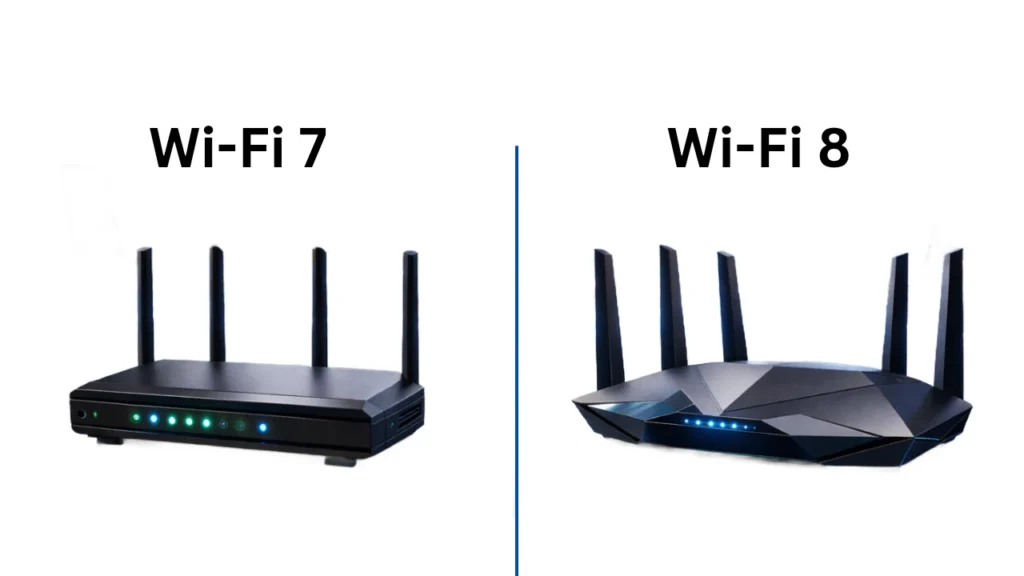
Many users wonder: if Wi-Fi 7 is already so fast, why do we need Wi-Fi 8? The table below highlights the key differences between them.
| Feature | Wi-Fi 7 (Current) | Wi-Fi 8 (Upcoming) |
|---|---|---|
| Primary Focus | Extreme Throughput (Speed) | Ultra High Reliability (Stability) |
| Latency Management | Good, but can drop in crowds | 25-30% lower latency even under heavy load |
| Coordination | Single Access Point focus | Multi-AP Coordination (MAPC) |
| IoT Capability | Standard capacity | Double range and better battery efficiency |
According to CES demos, Wi-Fi 8 can double throughput at medium range and cut latency by up to six times in high-load scenarios. This will form the basis for the upcoming Wi-Fi Alliance certification.
Company Showcases at CES 2026
At CES 2026, hardware makers didn’t just make claims—they demoed pre-standard hardware. Here’s what the big players brought to the table:
1. Asus ROG NeoCore Concept
Asus unveiled the ‘NeoCore’ concept router under its gaming ROG division. Its design ditches traditional antennas for a sleek polyhedral shape.
- Performance: It maintained Wi-Fi 7-like speeds in dense environments while excelling at load balancing.
2. Broadcom’s Chipset Revolution
Broadcom dominated at the hardware level, unveiling two new Wi-Fi 8 radio chips—BCM6714 and BCM6719—paired with the BCM4918 application processing unit.
- Usage: Designed for enterprise access points and mobile devices.
- AI Integration: Features AI-driven connectivity that adapts to network demands.
- Energy Savings: Claims 25% less power use during peak times.
3. MediaTek Filogic 8000 Series
MediaTek expanded its popular Filogic series. The Filogic 8000 chipset, demoed at CES, targets smartphones, laptops, and IoT gadgets.
- Partnerships: Brands like Asus, Deutsche Telekom, and Zyxel are already testing it.
- Availability: Expected to hit consumers by late 2026.
What Does This Mean for Consumers and Industry?
For the average user, Wi-Fi 8 will make your digital life smoother. The biggest headaches today—dead zones and buffering, especially with multiple people streaming 4K or video calling—will be history.
1. A Boon for Smart Homes and IoT
Wi-Fi 8’s ‘Enhanced Long Range’ tech and low power consumption will be a game-changer for IoT devices. Smart locks, security cameras, and sensors will see massively extended battery life since they won’t strain to stay connected.
2. Gaming and XR Experiences
Cloud gaming and VR/AR (Extended Reality) hate latency. Wi-Fi 8 reduces ‘Jitter’ and ‘Packet Loss’ by up to 25%, delivering smooth, real-time performance.
3. Industrial and Enterprise Use
In high-density spots like stadiums, airports, and factories—where thousands connect at once—Wi-Fi 8 prevents network jams. It smartly uses every bit of the spectrum.
When Will We Get This Tech?
While CES 2026 demos built huge excitement for Wi-Fi 8, it won’t reach everyday users anytime soon. The final IEEE standard is likely by 2028. That said, with rapid prep from Broadcom and MediaTek, the first Wi-Fi 8 devices could hit markets by late 2026 or early 2027.
If you’re eyeing a new router now, Wi-Fi 7 is still an awesome choice.
Also Read
- CES 2026: No more parlors, change your nail polish color with an app! iPolish introduces a magical invention.
- The magic of CES 2026: Owl-like cameras and a robot that changes its own batteries – see the tech of the future!
- CES 2026: A 3-screen phone and a magic knife with no edge, the future revealed on day one!
- 9mm thin TVs and 130-inch cinemas! Samsung and LG make a splash at CES 2026