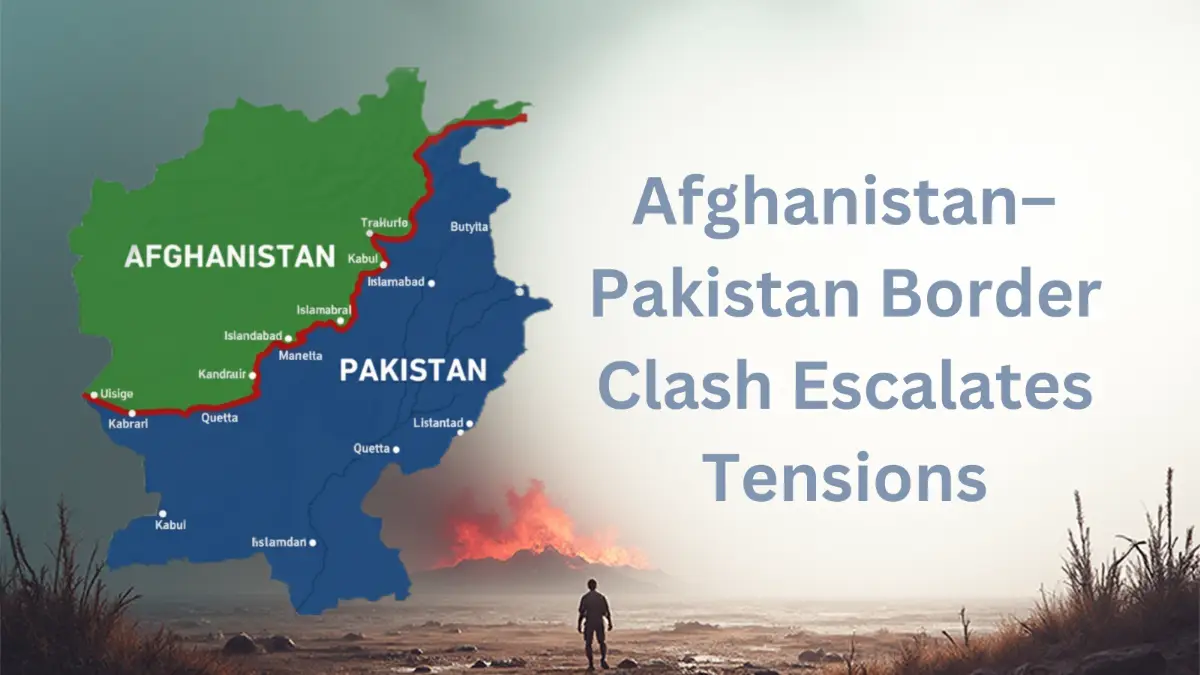
The recent clashes along the Afghanistan–Pakistan border have once again raised serious questions about South Asia’s security landscape. The violence, which erupted late Saturday night, has left at least 12 Pakistani soldiers dead following an attack by Afghan Taliban forces, with several others reported injured. Both militaries exchanged heavy gunfire and artillery shelling, creating panic in nearby villages and keeping the border region on high alert.
Intense Military Confrontation Along the Border
Through the night, fierce fighting was reported across Khyber Pakhtunkhwa, Balochistan, Angoor Adda, Bajaur, Kurram, Dir, Chitral and Baramcha near the Afghan border. Afghan forces claimed to have captured at least three Pakistani military posts, seizing a cache of weapons, ammunition and even a Pakistani tank during the offensive. On the other hand, Pakistan launched strong retaliatory strikes on Afghan border posts and alleged militant hideouts following the deaths of its soldiers, resulting in reported heavy losses on the Afghan side as well.
Pakistani security officials stated that their army responded with “full force,” shooting down three Afghan drones suspected of carrying explosives. The cross-border bombardment caused extensive damage to military infrastructure in the frontier areas, further escalating tensions.
Causes Behind the Escalation
The immediate trigger for the current clashes is believed to be Pakistan’s recent airstrikes inside Kabul and other Afghan regions. The Afghan Taliban termed these strikes a violation of their sovereignty and launched retaliatory attacks on Pakistani border posts. A spokesperson for the Afghan Ministry of Defence warned that any further violations by Pakistan would be met with an even stronger response.
Pakistan, however, accuses the Afghan government of harbouring members of the Tehrik-e-Taliban Pakistan (TTP), who allegedly carry out cross-border attacks on its security forces. Islamabad has urged the international community to pressure Afghanistan to dismantle terrorist safe havens and prevent further incursions. The Afghan Taliban, in turn, reject these allegations, insisting that their territory will not be used against any neighbouring nation.
International Reaction and Regional Concerns
The escalating situation has prompted calls for restraint from neighbouring countries, including Iran and Qatar. The United Nations has also warned that even minor disputes along the Afghan border risk spiralling into a larger conflict. India, which shares borders with both Afghanistan and Pakistan, is closely monitoring the developments. The ongoing hostility has deepened fears of instability across South Asia.
Local Situation and Civilian Impact
The continuing violence has had a direct impact on civilians living in border villages, where fear and insecurity have gripped the population. Local authorities have advised residents to stay indoors and avoid unnecessary outdoor activities. Hospitals are reportedly overwhelmed with injured individuals, and several families are preparing to evacuate from the affected areas.
Impact on Military and National Security
These clashes are also influencing both nations’ military strategies and security frameworks. Pakistan has placed its forces on high alert not only along the Afghan frontier but also near its border with India. Military installations, bunkers and surveillance posts have suffered significant damage due to the fighting.
Future Outlook and Warnings
The confrontation remains ongoing, with Afghan forces warning of intensified retaliation if Pakistan breaches the border again. Diplomatic dialogue appears unlikely as both sides continue to accuse each other of supporting terrorist elements.
Conclusion
The latest clashes along the Afghanistan–Pakistan border have once again pushed South Asia’s fragile security dynamics to a breaking point. Even a minor military provocation now carries the risk of escalating into a full-scale conflict — endangering not only citizens of both nations but also the broader stability of the region. For now, the world watches closely — uncertain whether the next move will lead toward peace or deeper confrontation.
Also Read