
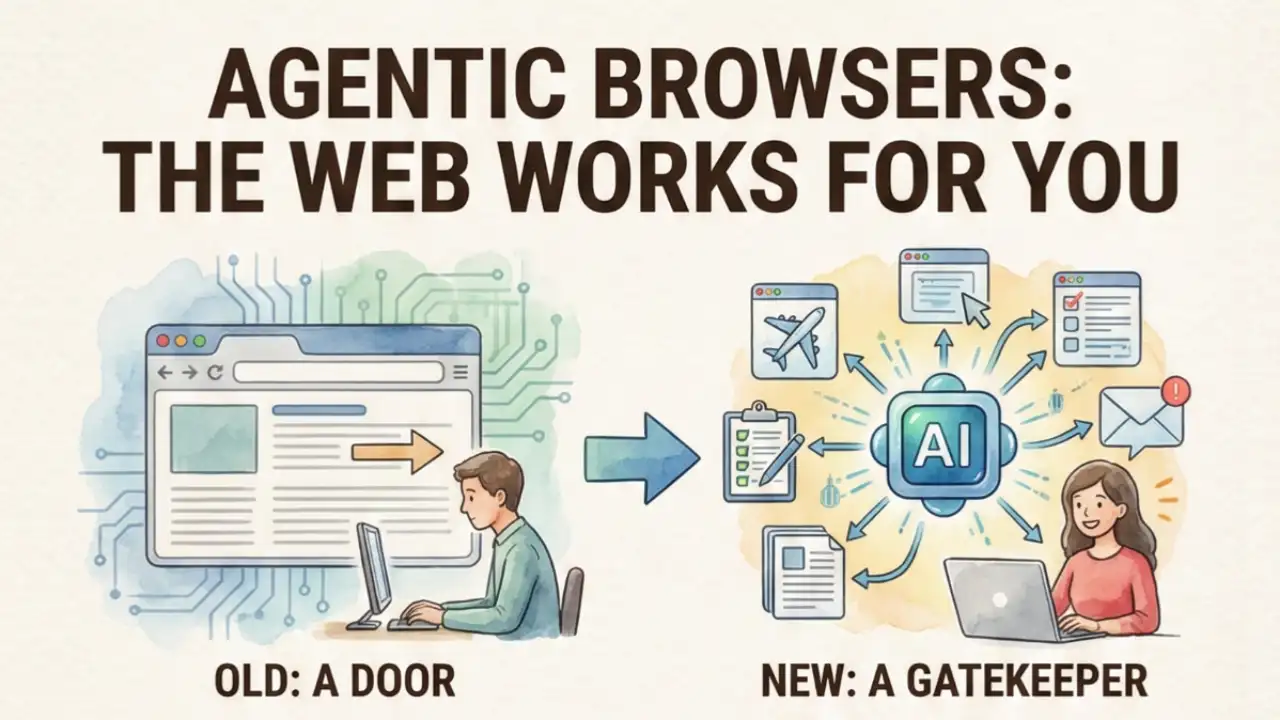
- Agentic Browser performs tasks autonomously online
- OpenAI and Google competing in this space
- Promises major productivity gains
- Security and accountability concerns remain
Agentic Browser: When Mosaic browser arrived in 1993, it told the world that the internet is not just a thing for scientists and engineers. Then Netscape came, Internet Explorer came, and one day Google Chrome made the web so simple that billions of people started opening it without thinking. Every time the browser changed, the world changed too. Now another change is standing at the door, and this time the difference is not just about speed or design. This time the browser will think on its own, move on its own, and work for you.
The old browser was a door, the new browser is a gatekeeper
Until now the job of a browser was simple. Where you wanted to go, it would take you there. You typed a URL, the page opened. You clicked a link, a new page opened. If you had to fill a form, do shopping, or book a ticket, you had to do all this yourself. The browser only showed the way.
But think about how much of our time we waste in these small tasks. Opening five websites to book a flight, comparing prices, then filling the form. Reading a dozen articles and making notes to research a product. Repeating the same work again and again to send a resume. All this is routine, mechanical, and tiring.
Agentic browsers come with the promise of doing these tasks on their own. You just tell your intention, the browser will do the rest. It will go to sites, collect information, fill forms, and come back to tell you the result.
Big players have entered the field
OpenAI has introduced the Atlas browser which connects the power of ChatGPT directly to the web. This browser can search, fill forms, do shopping, and draft emails. OpenAI’s goal is clear, not to let ChatGPT remain only a chat tool. They want AI to enter daily life in such a way that people feel incomplete without it.
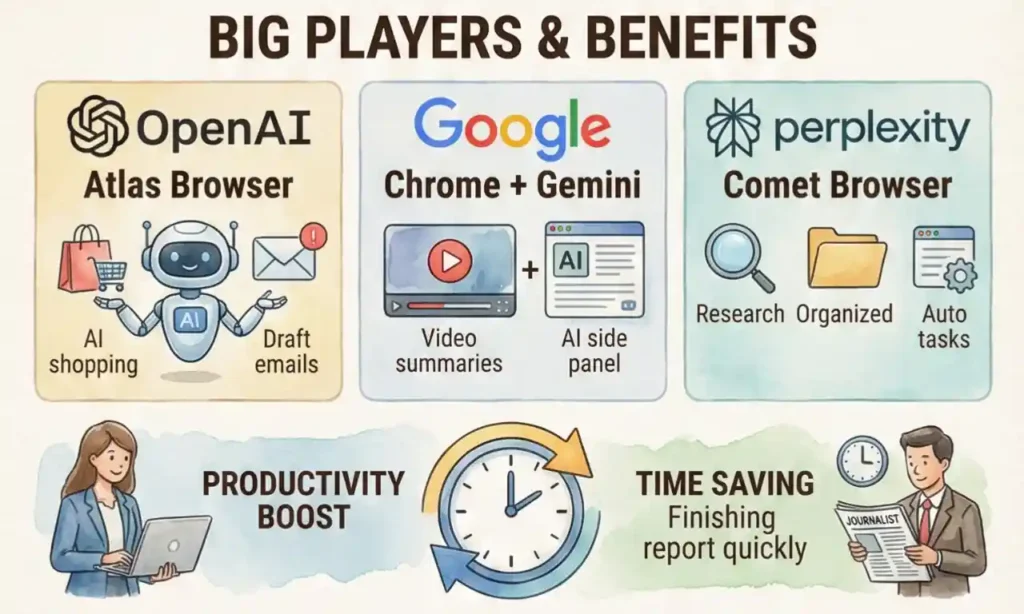
Google is also in this race and it has the biggest weapon, Chrome. Nearly 70 percent of the world’s internet users see the web through this browser. The integration of Gemini with Chrome that is coming is a big step toward making browsing agentic. Video summaries, help in open tabs, and an AI panel that stays with you all the time, all this together is turning the browser into an assistant.
Startups are not behind either. Perplexity’s Comet browser is built for research, email organization, and auto tasks. These small companies experiment fast and learn quickly from user feedback. That is why in this field some new feature appears every week.
Benefits that can open your eyes
The biggest promise of agentic browsers is productivity. A journalist who wants to write a report on a topic earlier had to spend hours on the web. Now he will just give instructions to the browser, and the browser will research on its own, extract summaries of sources, and prepare a primary draft. The work that once took two days will be done in two hours.
Marketing professionals, small business owners, researchers, that is, every person who spends time on the web daily, can benefit from this change. The millions of users of ChatGPT have already proved that people want help from AI and they do not take long to adopt it. Agentic browsers will take that hunger further.
But the challenges are not small either
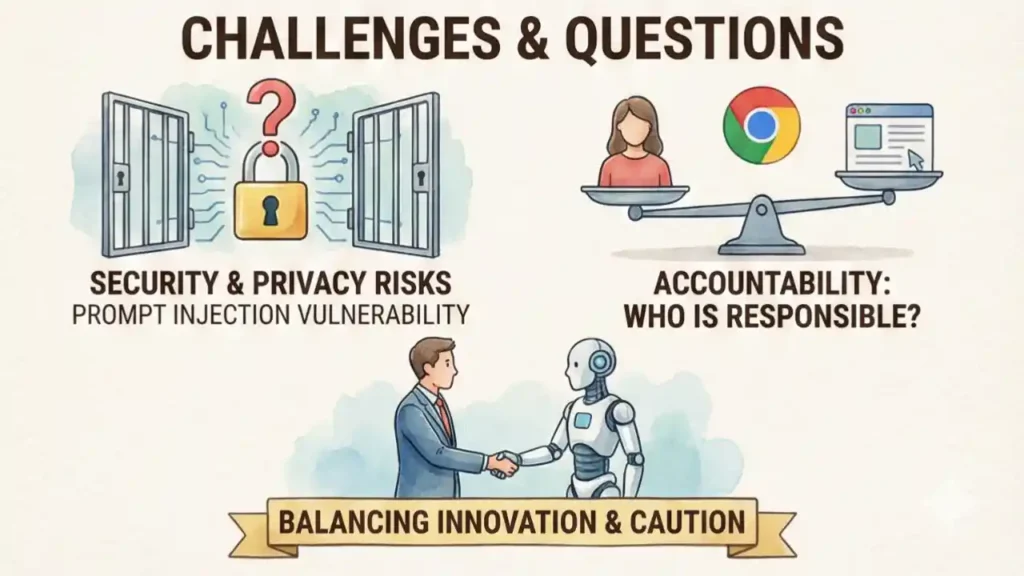
With every big technology, big questions also come. When a browser gets the authority to click on your behalf, fill forms, even make purchases, then the risks to security and privacy will also increase in the same proportion.
Researchers have found a serious weakness in Perplexity’s Comet called prompt injection. This means that a malicious website can give wrong instructions to the agent and it may act on those instructions. It is as dangerous as a stranger opening your bank account in your name.
Apart from this, there is the question of accountability. If the browser books the wrong ticket, buys the wrong product, or sends sensitive information to the wrong place, then who will be responsible? The user, the company that made the browser, or the website where the agent went? The answers to these questions are not yet in the law books.