
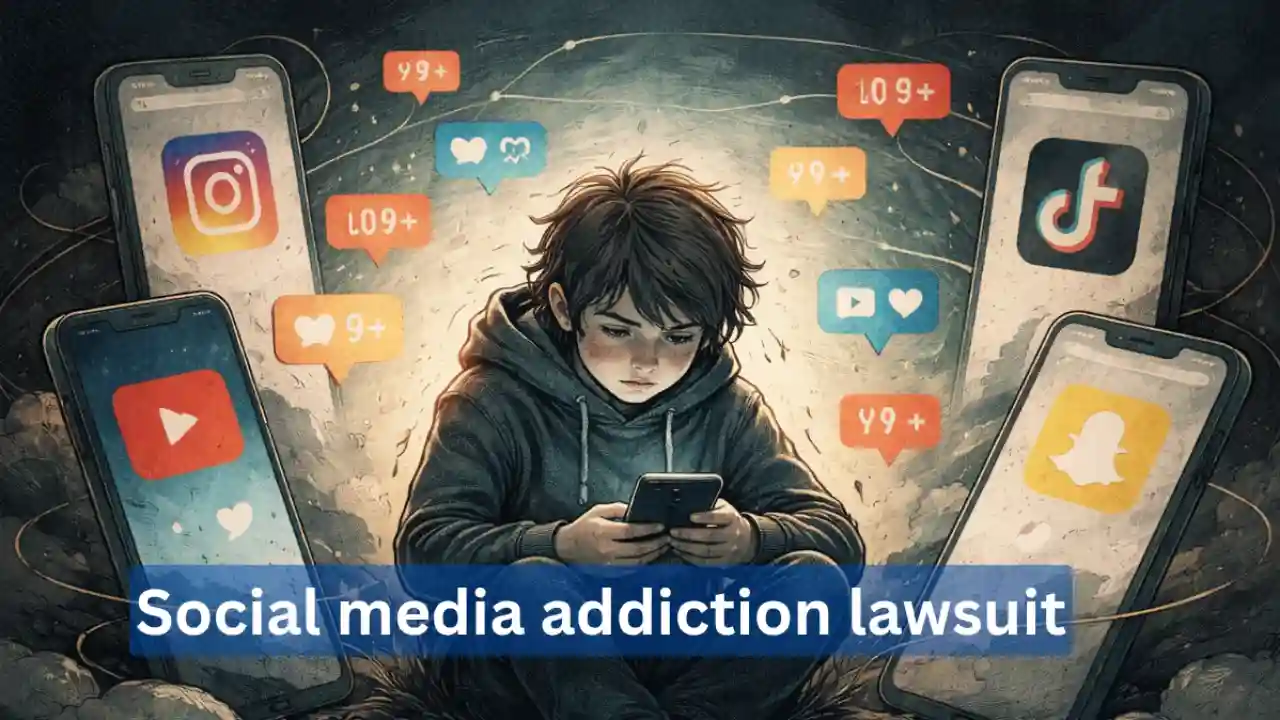
Social media addiction lawsuit: An important legal hearing has begun in California, USA, against social media giant companies. In this case, it has been alleged that they designed their platforms in such a way that children stay connected for long periods and develop addiction.
Hearing before the jury
This trial, going on in a Los Angeles court, is focused before a jury on the question of whether social media companies deliberately created features keeping children in mind that could have a negative impact on their mental health. During the hearing, the possibility of testimony by Meta’s chief has been indicated. In addition, the head of Instagram is also expected to be present in court.
Arguments by lawyers
Lawyer Mark Lanier, appearing for the victim, told the jury that these platforms are not just apps, but digital traps that keep children’s minds engaged for long periods. He argued that the companies’ design strategy aims to force users to return again and again.
On the other hand, lawyer Paul Schmidt, appearing for Meta, rejected these allegations. He said that family circumstances and personal life difficulties are more responsible for the young woman’s mental condition. YouTube also said that there is no mention of the platform’s direct impact in the medical records.
What is the whole matter
This trial is being conducted in a judge’s court. It is alleged that a 20-year-old woman, identified as Kelly G.M., was mentally affected due to excessive use of social media since childhood. The plaintiff side claims that she started watching YouTube at a very young age and that the companies did not provide her family with sufficient information about potential risks.