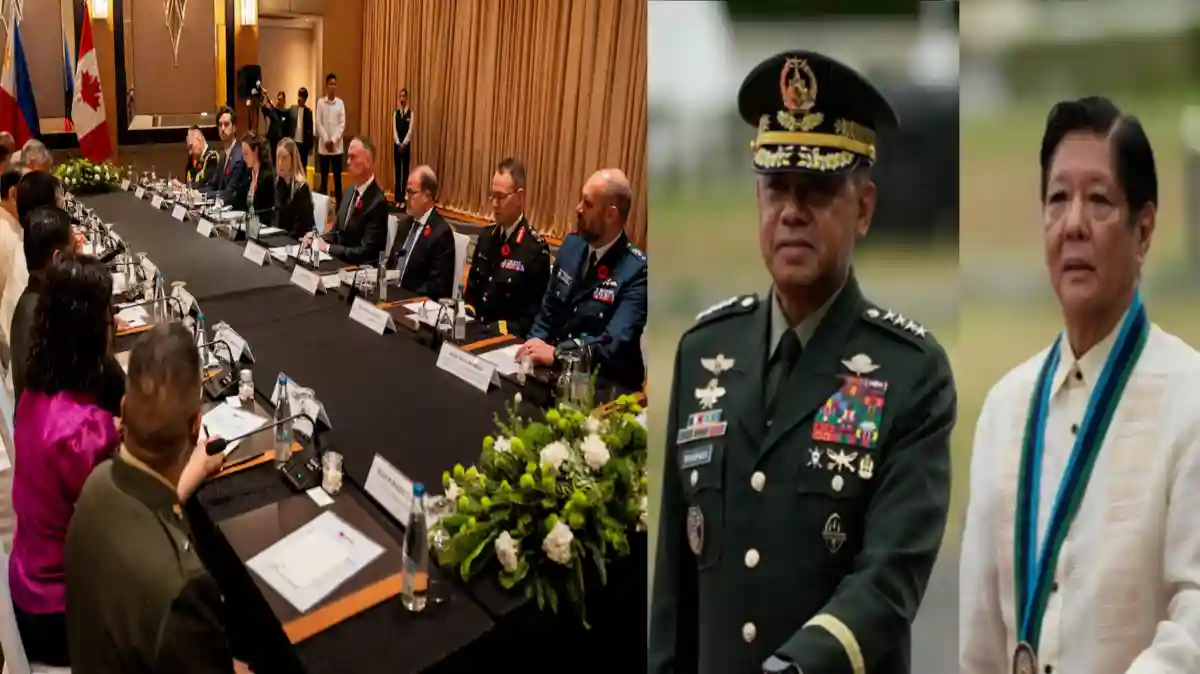
Amid increasing Chinese military assertiveness and territorial claims in the South China Sea, Canada and the Philippines signed a significant defense agreement on Sunday. This historic pact will allow the armed forces of both countries to conduct joint military exercises, share intelligence, and strengthen defense cooperation. The initiative will not only bolster the Philippines’ security capabilities but also enhance Canada’s presence in the Indo-Pacific region.
Purpose and Significance of the Agreement
The formal agreement, named the ‘Visiting Forces Status Agreement’ (SOFA), was signed in Manila by Philippine Defense Secretary Gilberto Teodoro Jr. and Canadian Defense Secretary David McGuinty. Under this accord, Canada can now deploy its troops to the Philippines, while the Philippines can send its military units to Canada for training and joint exercises.
Experts say the agreement will give a new direction to the defense relations between the two countries. Similar to India and Australia, Canada is now playing an active role in Indo-Pacific strategy. The pact reflects their shared objective of strengthening a rules-based global order and maintaining freedom of navigation in the region.
Changing Strategic Landscape in the South China Sea
The South China Sea is one of the world’s most strategic and disputed maritime regions. It serves as a major global trade route, handling roughly one-third of the world’s maritime commercial traffic. China claims nearly the entire region, while the Philippines, Vietnam, Malaysia, Brunei, and Taiwan also assert territorial rights over parts of it.
In 2016, an international arbitration tribunal declared China’s claims invalid, stating that Beijing’s “Nine-Dash Line” claim was not legally sustainable under international law. However, China rejected the ruling and has further intensified its military presence. Chinese Coast Guard and militia vessels have frequently harassed and blocked Philippine fishing boats in the area.
Philippines’ Strategic Priorities
President Ferdinand Marcos Jr. has repeatedly emphasized that his administration’s primary goal is to modernize and technologically strengthen the Philippine military. He stated that enhancing regional and global cooperation has become essential to protect the nation’s sovereignty. In line with this, the Philippines has signed multiple defense agreements in recent years with countries including the United States, Japan, Australia, and now Canada.
Philippine Defense Secretary Teodoro Jr. described the agreement as “a milestone for regional security.” He added that this partnership will ensure long-term security and stability for both countries while granting the Philippines access to modern military technologies.
Canada’s New Direction in Indo-Pacific Policy
Canada has been redefining its policy in the Indo-Pacific in recent years. Canadian Defense Secretary David McGuinty said the agreement demonstrates Canada’s “firm commitment” to supporting a free and open Indo-Pacific. He emphasized that Canada aims to enhance cooperation to safeguard democratic values, rule of law, and free trade in the region.
Canada’s navy is already participating in joint patrols with Japan and South Korea. This new pact with the Philippines will provide Canada an opportunity to establish a tangible military partnership in Southeast Asia. Many analysts view it as a “decisive entry” for Canada into the regional balance of power.
China’s Response and Potential Impact
So far, China has not issued an official reaction to the agreement, though it has historically criticized such moves. Beijing argues that increased foreign military presence in the region threatens “regional stability.” China has repeatedly claimed that the South China Sea falls under its “historical rights.”
However, international experts believe the Canada-Philippines initiative will help establish a real balance of power. It will make unilateral action by China more challenging and boost confidence among smaller nations in the region.
New Direction in Global and Regional Cooperation
The Philippines is now building a broad strategic cooperation network with the United States, Japan, Australia, and Canada. This network aims not only to increase military exchanges but also to strengthen disaster management, humanitarian relief operations, and maritime security. For Canada, this is the first agreement that directly secures its military presence in the Indo-Pacific region.
International relations experts believe the pact will create a new balance of power in sensitive areas like the South China Sea. It will enhance the Philippines’ defense capabilities while giving Canada an opportunity to strengthen its role as a global power.
Conclusion
Overall, the defense agreement between Canada and the Philippines could prove to be a decisive turning point amid rising tensions in the South China Sea. The partnership is strategically, politically, and economically beneficial for both nations, marking a significant step in regional security cooperation.
Also Read