
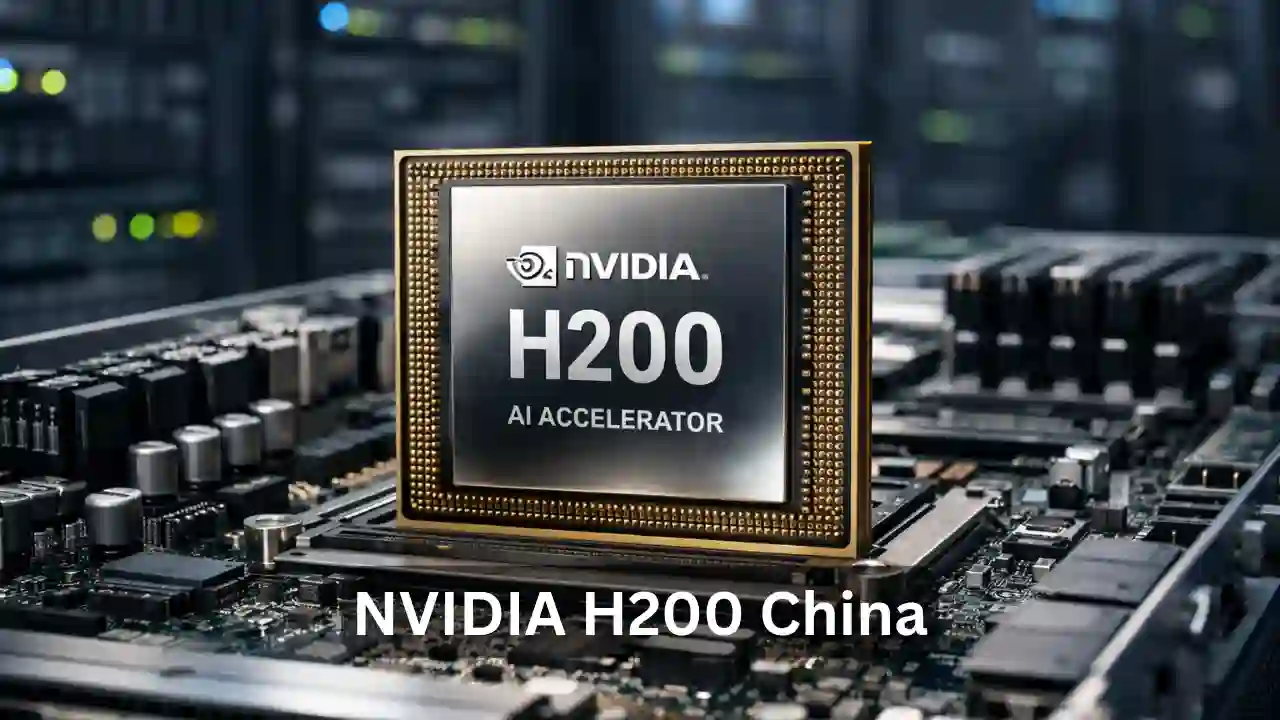
In China, the government’s stance on advanced AI hardware once again appears to be tightening. This time at the center of discussion are NVIDIA H200 AI chip and some statements by the company’s CEO Jensen Huang, in which he claimed to have received large-scale orders from China. According to recent reports, Beijing has tightened conditions on the use of foreign AI chips under its policy of promoting domestic technology. There are indications that China now wants to strategically reduce dependence on foreign hardware in sensitive areas and is emphasizing giving priority to local companies.
What the report says
According to reports from the tech industry, the Chinese government has clearly instructed some major tech companies that they can purchase NVIDIA’s H200 AI chips only in “special circumstances.” These special circumstances mainly include research projects associated with universities and academic research work.
The reports also claim that the guidelines issued by the government have been deliberately kept vague. Companies have been told to purchase AI chips only when it is actually necessary, but no clear definition of this necessity has been established.
It is believed that such vagueness is part of a strategy to keep pressure on companies so that they exercise extra caution in their decisions. Also, to convey this message at a broader level and clarify the interpretation of the policy, a series of meetings may be held in the coming time.
Boost to domestic chip makers
This whole episode has come to light at a time when China has already asked some companies to stop ordering NVIDIA’s H200 AI chips. The government’s main objective is to promote domestic chip makers and slowly reduce dependence on foreign companies in advanced technology.
China has invested heavily in recent years to achieve self-reliance in artificial intelligence and the semiconductor industry. The government is trying to ensure that data centers and training of large AI models use as much domestic hardware as possible.
Controversy over payment
The company has publicly denied these claims. In a statement issued by NVIDIA, it said that it never asks for payment for products that have not been delivered to customers.
The company rejected this claim publicly. According to NVIDIA’s statement, the company never demands payment for products that have not been delivered to customers. This clarification came at a time when questions related to the supply chain and export control were already present in the market.
The gap between Jensen Huang’s claims and ground reality
Recently NVIDIA had claimed that it received a large number of orders from China for the H200 AI chip. Some media reports said this number was more than 2 million chips. It is said that the price of one H200 chip is about 27,000 US dollars, which in Indian currency is roughly equivalent to about 2.2 to 2.3 million rupees.
The problem is thought to be that the reported demand is far greater than NVIDIA’s current inventory. In such a case, fulfilling all orders on time is being described as practically difficult.
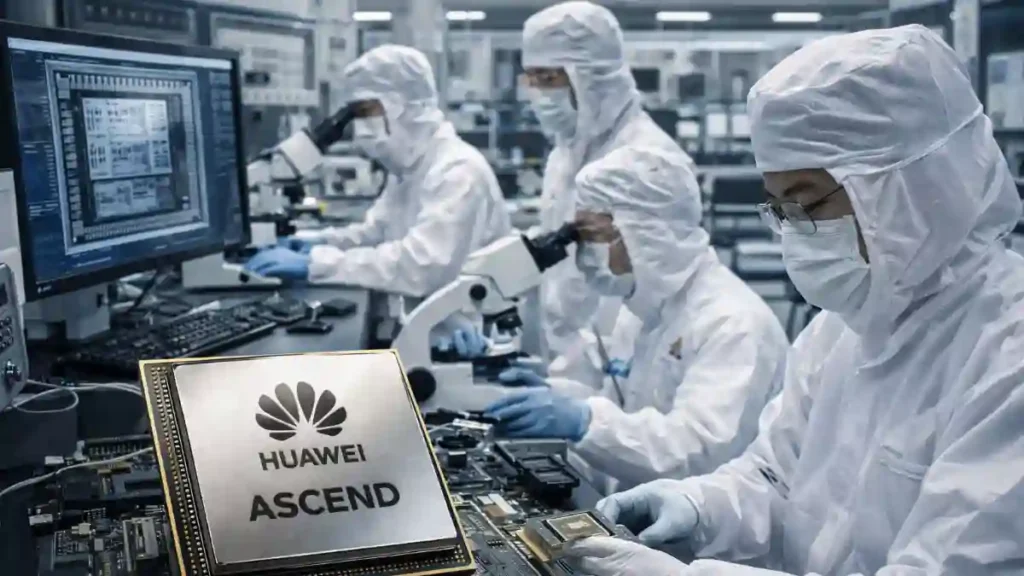
Meanwhile, within China companies like Huawei have already developed their own domestic AI processors, among which the Ascend series is considered prominent. However, experts believe that for training large and advanced AI models these domestic chips still have not reached the level of NVIDIA’s H200 chips. For this reason, Chinese companies face the challenge of balancing self-reliance and performance.
China firm stance
Experts believe that China’s firm stance could increase uncertainty for NVIDIA in one of its most important foreign markets. Concerns are being raised that new challenges may arise for the company regarding orders, supply and future strategies. On the other hand, the signals are clear that Beijing is not in the mood to compromise on its long-term goal of self-reliance in the AI and semiconductor sector. The government’s priority is to strengthen domestic control over strategic technologies, even if it has to endure short-term pressure or instability.