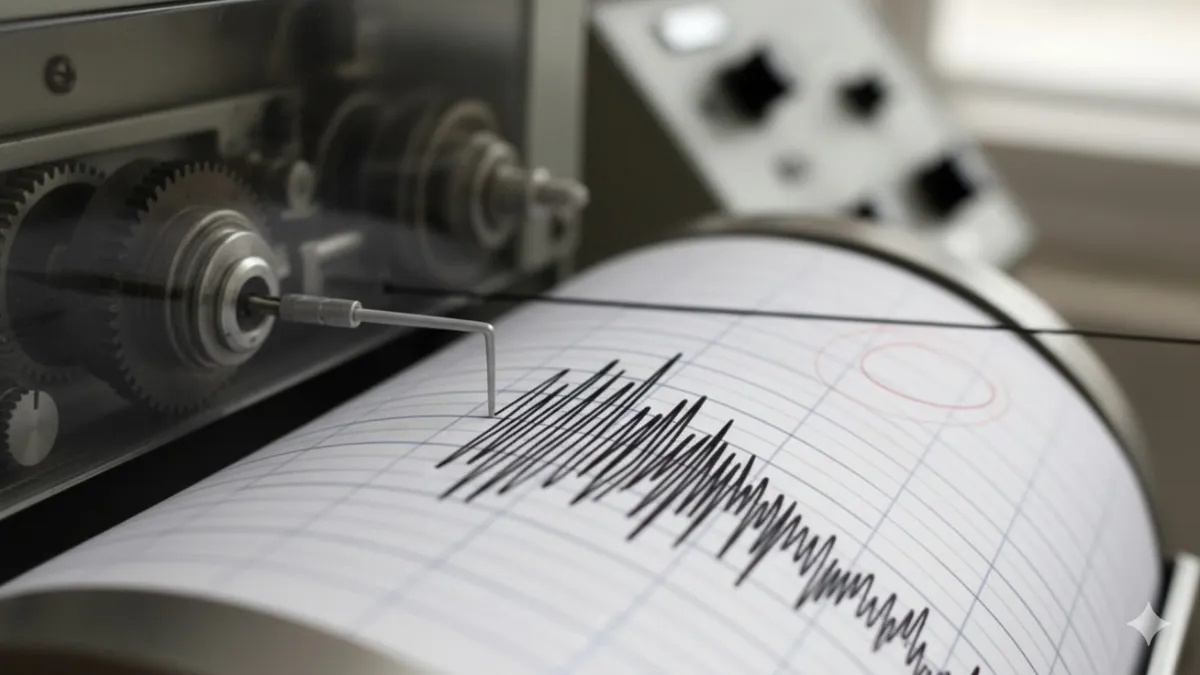
The dangerous sea route of Drake Passage, located between South America and Antarctica, was jolted on Friday by powerful tremors deep beneath the earth. According to the US Geological Survey, a 7.8-magnitude earthquake struck the region. The tremor occurred at a shallow depth of just 10 kilometres below the seabed, which made its intensity clearly felt across nearby coastal areas.
At the time of the quake, weather conditions in Drake Passage were already extremely rough. Strong winds, towering waves, and icy currents had made the region perilous even before the quake hit. The sudden tremors shook ships and coastal outposts, leaving crew members and local residents startled. Many rushed to higher ground and safer locations as the ground continued to shake.
Tsunami Alert Issued Immediately
As soon as the quake’s epicentre was identified, the Pacific Tsunami Warning Center and Chile’s SHOA Marine Authority issued tsunami alerts for Drake Passage and nearby coastal zones. The warning specifically advised O’Higgins Military Base, Cape Horn, and neighbouring provinces, as well as vessels in the vicinity, to remain on high alert.
Officials used radio and satellite communication to quickly disseminate the message to all ships and naval bases. Residents were instructed to stay away from the sea, move to elevated areas, and avoid coastal regions at all costs.
Why the Alert Was Withdrawn
For about an hour, the area remained under serious tsunami threat. Scientists studied ocean conditions and found that due to the deep and uneven seafloor structure of the Drake Passage and the direction of the Antarctic Circumpolar Current, the energy of the waves was weaker than expected. As a result, the likelihood of a major tsunami forming decreased significantly.
Following this analysis, Chilean and international maritime agencies withdrew the tsunami alert. Fortunately, no casualties or significant damage were reported. Though residents breathed a sigh of relief, a sense of fear and caution continued to linger.
The Dangerous Legacy of the Drake Passage
Drake Passage is counted among the world’s most treacherous sea routes. It connects the South Atlantic and Pacific Oceans, where fierce winds, high waves, and drifting icebergs pose serious challenges for navigation.
The Antarctic Circumpolar Current constantly churns through this area, often creating waves as high as 10 to 20 metres. That’s why every vessel crossing the region keeps a close watch on the weather and sea conditions. This latest earthquake has added a new layer of uncertainty to an already unpredictable environment.
The Philippines Also Shaken the Same Day
While global attention was focused on the quake and tsunami alert in Drake Passage, the Philippines also experienced a powerful tremor on the same day. A 6.7-magnitude earthquake struck the Mindanao region, shaking areas near the sea.
Government agencies in the Philippines quickly issued a tsunami warning, ordering residents in coastal zones to move to higher, safer ground. Police, military, and rescue teams were deployed immediately across coastal districts. In many places, people were evacuated in buses and trucks to hill areas. Fishermen along the coast abandoned their boats and ran for safety.
Threat Persists After the Quake
After the main quake, a strong aftershock was also felt in the Philippines, further heightening fear among residents. The sea water slightly receded, but authorities warned that it could take time for conditions to return to normal. Coastal areas remained under close surveillance, while schools, markets, and public spaces were temporarily closed as a precaution.
The government also advised nearby island communities to remain vigilant, noting that uncertainty often persists for some time after such seismic activity.
Surge in Global Seismic Activity
Geologists suggest that these are not isolated incidents but part of a broader increase in global seismic activity observed in recent months. Data show a noticeable rise in earthquakes across several oceanic and coastal regions.
The 7.8-magnitude quake in Drake Passage and the 6.7-magnitude tremor in the Philippines indicate that Earth’s tectonic plates are becoming increasingly active and unstable. Shallow-focus quakes in marine regions are particularly dangerous, as they not only shake the ground but can also disturb ocean waves, raising the risk of tsunamis.
Authorities Advise Continued Caution
Officials in both regions have urged residents to remain cautious. Scientists continue to monitor sea temperature, pressure, and wave patterns closely. In Drake Passage, naval and meteorological agencies have intensified surveillance of maritime traffic, while in the Philippines, rescue teams and volunteers remain stationed at coastal outposts.
Experts emphasise that the most effective way to minimise the impact of natural disasters is through timely warnings and swift response. In both these cases, prompt alerts and rapid action helped prevent what could have been large-scale devastation.
Also Read