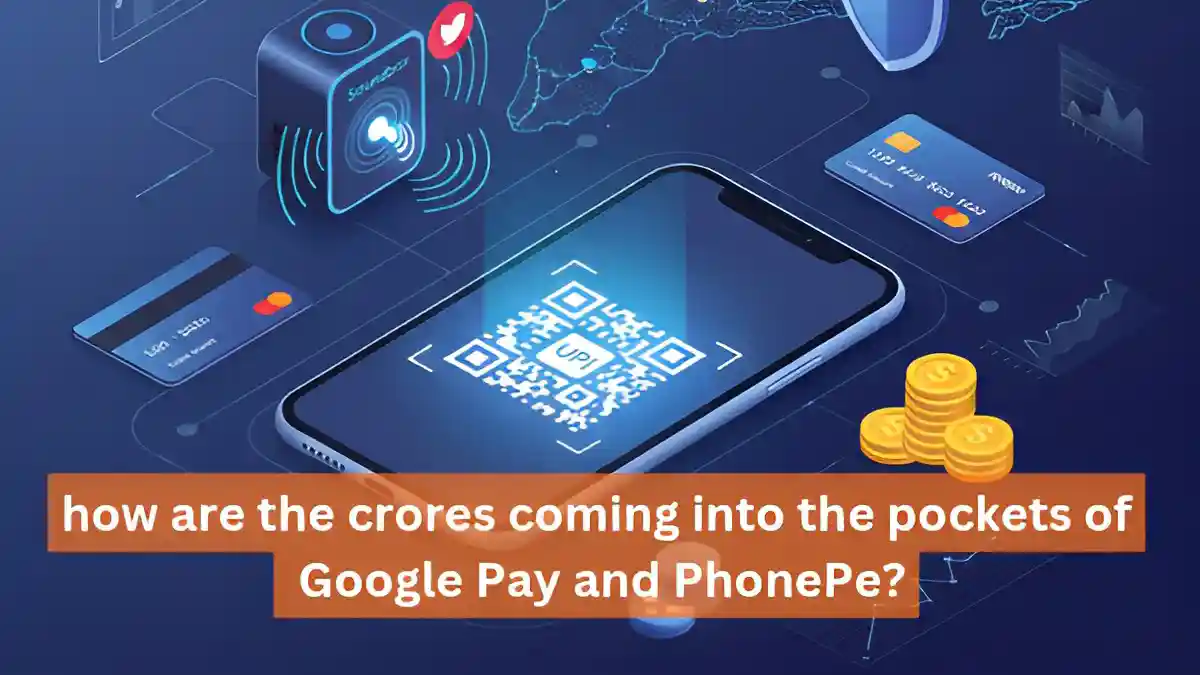
In India’s digital economy, one question is on everyone’s mind: “When UPI transactions are completely free, how do companies like Google Pay and PhonePe earn thousands of crores of rupees?”
From roadside tea stalls to large shopping malls, payments everywhere are now completed with a simple QR scan. By 2025, India’s digital payments landscape has transformed so significantly that, according to NPCI data, billions of transactions are being processed every month. But for these apps, the real game is not the ‘transaction’ itself, but the ‘data’ and the ‘ecosystem’ hidden behind it.
How Google Pay and PhonePe make money from UPI
Initially, UPI was only a ‘peer-to-peer’ (P2P) payment tool, but today it has evolved into a full-fledged financial ecosystem. To move from losses to profits, these companies have diversified their revenue streams into multiple segments.
1. Merchant Services
Although UPI is free for regular users, merchant services have become the backbone of these fintech companies. PhonePe’s ‘payment service revenue’ grew by 31.6% in FY25, crossing ₹6,300 crore. This primarily includes:
- Soundbox Subscriptions: You must have heard the “Paytm karo” or PhonePe voice at shops. These speakers are not free. PhonePe charges around ₹100 per month for these devices, generating over ₹360 crore annually in fixed revenue.
- MDR and Processing Fees: A small fee is charged on certain large merchant transactions and on credit cards used via UPI, which turns into a substantial amount when multiplied across millions of transactions.
- Device Setup Fees: A one-time fee is charged for providing QR codes and device setup to new merchants.
2. Financial Services and the Commission Game
PhonePe and Google Pay are no longer just payment apps—they now function like ‘digital banks’. Earnings from financial services have tripled over the past year:
- Insurance Distribution: By selling car, bike, and health insurance, these companies earn hefty commissions from insurance providers.
- Investment Products: Mutual funds and SIPs (Systematic Investment Plans) allow these platforms to manage the money of millions of Indians, earning a share of management fees.
- Lending (Loans): Google Pay has partnered with banks like Axis Bank to offer micro-credit. By providing instant loans to small merchants, these companies earn a share of interest and processing fees.
3. Digital Advertising and Cashback Strategy
Do you think scratch card offers exist only for your benefit? In reality, they are part of targeted advertising. Brands like Domino’s, Myntra, and Swiggy pay heavily to these platforms so that their vouchers appear on your app.
FY25 Numbers
By November 2025, India recorded around 20.47 billion UPI transactions, with a total value of ₹24.58 lakh crore. Looking at the market share makes the picture clear:
| Platform | Market Share (Volume) | Revenue Growth (FY25) |
|---|---|---|
| PhonePe | 45.7% | ₹7,115 Crore (↑ 40%) |
| Google Pay | 35.3% | Strong Profit Margin |
Data Monetization: Data Is the New Gold
UPI apps have the most accurate data on your spending habits. When you recharge, how much electricity bill you pay, and which e-commerce platform you prefer—this data is extremely valuable for credit scoring. Banks use this information to decide how much loan you are eligible for, and in return, these fintech companies charge banks a ‘lead generation fee’.
Credit on UPI and IPO Strategy
The future of UPI now lies in ‘credit-on-UPI’. By linking RuPay credit cards with UPI, these companies are entering the credit market, where revenue potential is significantly higher. PhonePe is also preparing to launch its IPO soon, with a valuation that could cross $15 billion.
Also Read