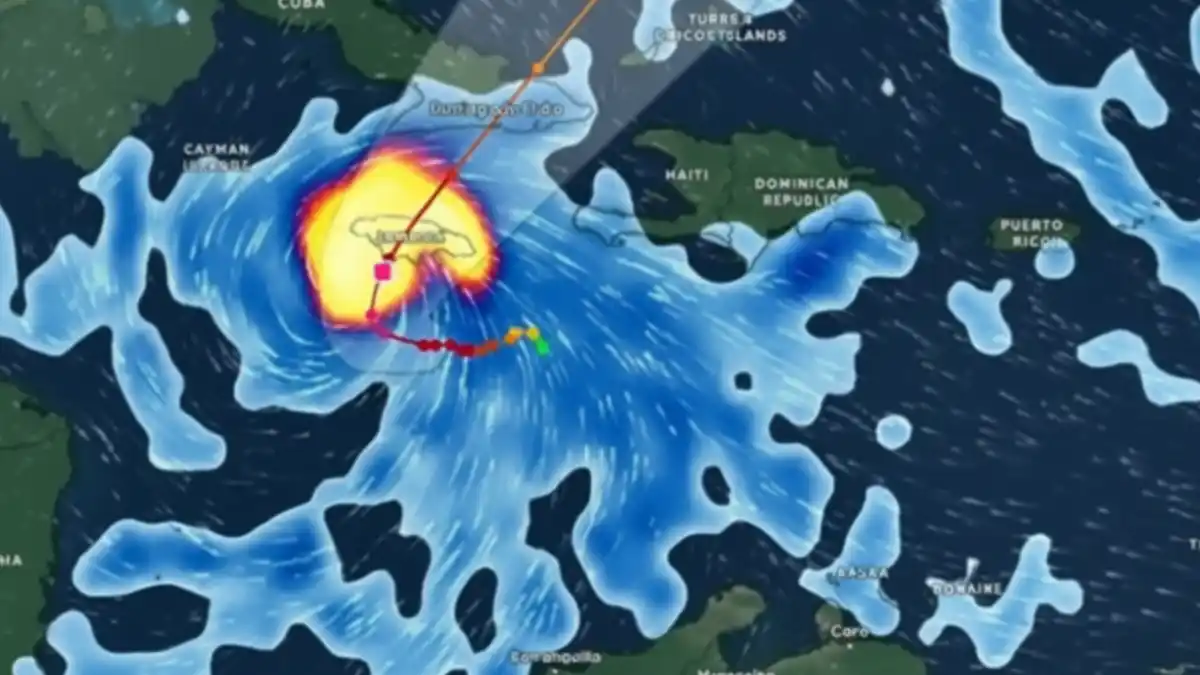
In Jamaica, Hurricane Melissa has turned into one of the most devastating natural disasters in the country’s history over the past two days. In 2025, it became the fourth Category-5 hurricane in the Caribbean region, but according to scientists, its destructive power has surpassed that of 2005’s ‘Katrina’ and 2017’s ‘Maria’. Moving at a slow pace, this storm has been termed the ‘storm of the century’ and is among the strongest ever recorded.
‘Melissa’ reaches Category-5 — breaks speed records
On Saturday, Melissa’s wind speed was around 120 km/h, but by Sunday night it surged to 225 km/h. By Monday, it reached 260 km/h (around 175 mph), leading to its classification as a Category-5 super hurricane. In some areas, wind speeds touched 295 km/h, sparking widespread panic across the nation.
Destruction in Jamaica — government declares disaster zone
Due to Melissa’s devastation, Prime Minister Andrew Holness has declared the entire nation a disaster area to accelerate relief and rescue operations. Government Minister Desmond McKenzie stated that roads, hospitals, schools, and power infrastructure have suffered extensive damage.
Over 6,000 people have been moved to government shelters, while mandatory evacuation orders have been issued for more than 28,000 residents. Hundreds of homes have been flooded, and several regions are completely submerged. The southwestern parish of St. Elizabeth remains the worst affected, with the entire area reported to be “underwater.”
Power outage and disruption of essential services
According to the Jamaica Public Service, more than 500,000 people are without electricity as of Tuesday, and gas and energy supplies have been cut off in over 52,000 homes. Four major hospitals have sustained damage, and patients are being shifted to upper floors to avoid the risk of flooding.
Fatalities and humanitarian crisis
Reports indicate that at least three people lost their lives during storm preparations. Authorities have not yet officially confirmed direct deaths caused by the hurricane, as rescue teams are still trying to reach the most severely affected regions.
Damage extends to Haiti, Dominican Republic, and Cuba
The hurricane has already wreaked havoc in Haiti and the Dominican Republic—flooding hundreds of homes and claiming one life in Santo Domingo. Its current trajectory points toward Cuba and the Bahamas, where warnings for heavy rainfall, landslides, and flooding have been issued.
Government advisories and public response
Prime Minister Holness and local authorities have urged citizens to remain indoors, follow official safety instructions, and avoid taking life-threatening risks. Rescue efforts are ongoing, debris is being cleared from roads, and relief distribution has been made the top priority.
Climate change — the driving force behind intensifying disasters
Meteorologists believe that the increasing frequency and intensity of hurricanes like Melissa are direct consequences of global climate change. This is the fourth Category-5 hurricane to strike the Caribbean in 2025, shaking the entire region.
Next 24 hours critical
Weather officials and experts have warned that the next 24 hours will be crucial for tracking Melissa’s impact, which could have lasting effects on the Caribbean. The administration remains on high alert as residents stay sheltered indoors.
Overall, Melissa has emerged as Jamaica’s most dangerous hurricane to date, leaving not only the nation but the entire Caribbean region gripped by fear and devastation.
Also Read