
Whether it’s the scorching summer heat requiring fans and ACs, or the chilling winter demanding room heaters, the inverter has become the ultimate ‘lifeline’ for every household. During power cuts, it provides relief without any hassle. But, have you ever considered how well you treat this essential device?
It is often observed that a little negligence can cut your battery’s lifespan in half. Conversely, adopting a few smart and simple Inverter Battery Maintenance Tips can ensure that a battery meant to last 3 years stays fit for up to 7 years.
In today’s 1tak Tech Geeky guide, we reveal 5 easy maintenance habits that will not only save you money but also save you from the hassle of frequent battery replacements. Plus, we’ll touch upon how new technologies like Gelithium and Lithium-ion are changing the market game.
1. The First Condition for Long Battery Life
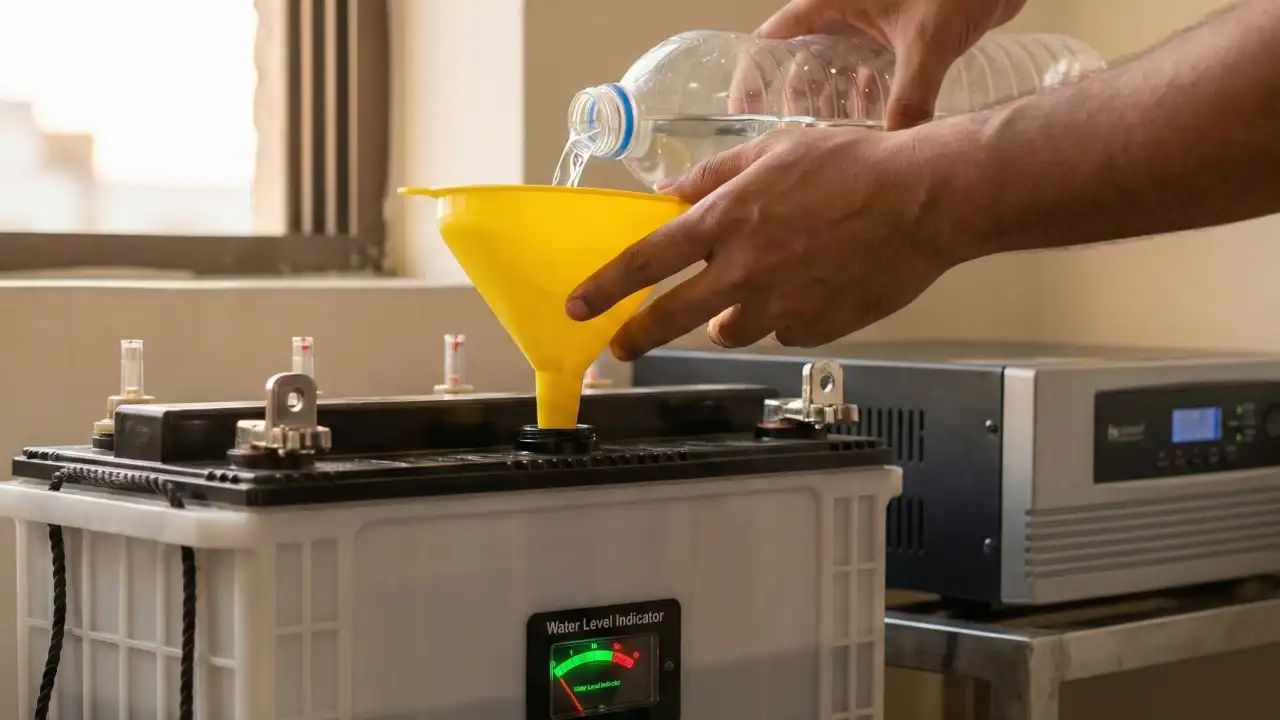
Inverter batteries, especially the Tubular Batteries commonly used in homes, are incomplete without water. Just as humans need oxygen, these batteries rely on distilled water for the electrochemical reactions that store energy.
Why and When to Check Water?
- Frequency: Experts from leading brands like Luminous and Exide advise checking the water level every 45 to 60 days.
- The Indicators: Look at the float indicators on top of the battery. The water level should always remain between the ‘Minimum’ and ‘Maximum’ marks.
Critical Warning: Never use tap water or rainwater. The minerals and impurities present in them can clog the battery plate pores, permanently damaging the battery. Always use Distilled Water specifically meant for batteries.
If a battery runs ‘Dry’, the internal plates get exposed to oxygen and oxidize, significantly reducing their capacity to hold a charge forever.
2. Corrosion is the Silent Killer
Have you ever noticed a white or greenish powder accumulating on your battery terminals (where the wires connect)? This is called ‘Corrosion’ or rust. Many people believe that as long as the inverter is charging, everything is fine. In reality, this carbon layer acts like a barrier, restricting current flow and eating away at your Inverter Battery Life.
The Right Way to Clean Terminals:
- Turn off the inverter switch and disconnect the main power supply.
- Mix one teaspoon of baking soda in a cup of lukewarm water.
- Use an old toothbrush to scrub the terminals with this solution. You will see the corrosion fizz away immediately.
- After wiping it dry with a clean cloth, apply a thin layer of Petroleum Jelly (Vaseline) to prevent future rust.
According to experts at Amaron, keeping terminals clean can boost current flow efficiency by 20-30%, ensuring faster charging.
3. Letting it Sit Idle is Dangerous
In areas where power cuts are rare, inverters often sit ‘Idle’ for months. You might be surprised to know that lack of use can be more damaging than overuse.
Why is the Discharge Cycle Important?
When a battery remains fully charged without discharging for a long time, the gravity of the electrolyte becomes unbalanced, and a layer of hard lead sulfate forms on the plates (Sulfation).
The Solution: “Exercise” your battery. At least once a month, switch off the main MCB of your house and let the inverter run for about an hour. Specialists at Tata Green Battery state that this regular charge-discharge cycle keeps the chemical composition active and healthy.
4. Avoid Deep Discharge at All Costs
A common mistake is letting the inverter run until it completely dies and shuts down on its own. This habit is toxic for battery health. Draining a battery to 0% pushes it into a state of Deep Discharge.
- The Damage: Deep discharge causes physical stress to the plates, making it difficult for the battery to recharge fully again. It significantly reduces the cycle life.
- The Good Habit: As soon as the ‘Low Battery’ alarm beeps, switch off the inverter or reduce the load immediately. Try to keep the charge between 50% and 80% for optimal longevity.
Surveys indicate that the habit of deep discharging can reduce the lifespan of a lead-acid battery by nearly 50%.
5. Don’t Age Your Battery Prematurely
Every battery has a specific capacity (measured in Ah – Ampere hours). If you connect heavy loads like an AC, Refrigerator, or Induction Cooker to a standard inverter setup, it puts immense pressure on the battery.
Effects of Overloading:
- Drastic reduction in backup time.
- Internal Overheating of the battery.
- Warping or bending of lead plates due to excessive heat.
Always ensure only basic devices like LED bulbs, fans, TVs, and mobile chargers run on the inverter. This is one of the most crucial Inverter Battery Maintenance Tips often ignored by users.
Are Gelithium and Lithium Batteries Better?
The market is evolving. While traditional Lead-Acid batteries require maintenance, new technologies like Lithium-ion and Gelithium (Gel + Lithium Tech) batteries are emerging as ‘Maintenance-Free’ alternatives.
- Benefits: No water topping required, faster charging, and a lifespan that can touch 10 years.
- Cost: While the upfront cost is higher, they prove to be more economical in the long run due to zero maintenance costs and higher efficiency.
Also Read