- Open military confrontation after Khamenei’s death
- Iran launches missiles and drone strikes
- Israel and US intensify counter operations
- Gulf nations face rising security concerns
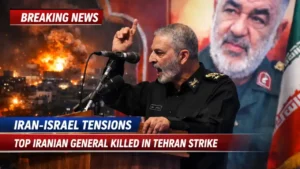
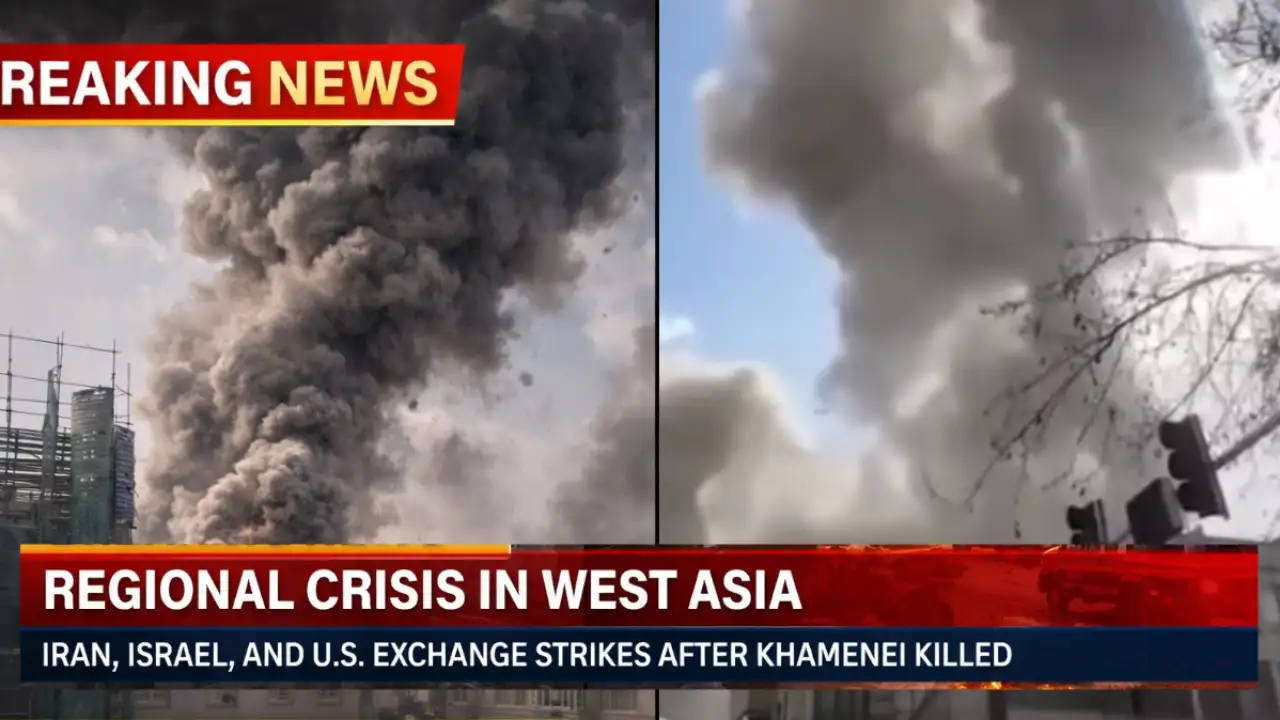
Iran Israel Conflict: The situation in West Asia has suddenly become extremely tense. Iran has openly announced retaliatory action after the killing of its Supreme Leader Ayatollah Ali Khamenei. Tehran has accused the United States and Israel of targeting Khamenei and several senior officials in a joint military attack. After this, a series of missiles, drones, and airstrikes began across the region, with widespread impact visible from the Gulf countries to Israel.
On Sunday, Iranian Parliament Speaker Mohammad Bagher Ghalibaf issued a strong warning in a televised address. He said, “You have crossed our red line and you will have to pay the price.” He further said, “We will strike you with such devastating blows that you will be forced to beg for your own lives.” Iran has made it clear that it will take action at every level to avenge Khamenei’s death.
After the explosions in Tehran, thick plumes of smoke were seen in several areas, especially in zones with government buildings. According to Iranian officials, more than 200 people have been killed since the start of the American and Israeli attacks. It has been claimed that senior leadership figures were specifically targeted in these strikes.
In response, Iran fired missiles and drones toward Israel and US bases located in Gulf countries. Israel also announced that it would continue its airstrikes. Loud explosions were heard in Tel Aviv, which were linked either to missile attacks or interception efforts. According to Israel’s emergency services, eight people were killed and 28 injured in an attack on a Jewish place of worship in the central city of Beit Shemesh. The total number of deaths across the country has been reported as 10, while more than 120 people have been injured. The army said that several missiles were neutralized mid-air.
The US military has confirmed that three of its soldiers were killed and five seriously injured after the campaign began. This is the first confirmed military loss on the American side in this conflict. Meanwhile, US President Donald Trump warned on social media that any retaliatory step would worsen the situation. He wrote that if Iran moves forward with further attacks, the United States would respond “with a force never seen before.”
There has also been rapid movement regarding leadership within Iran. President Masoud Pezeshkian said in a message broadcast on state television that a new leadership council has taken charge. Foreign Minister Abbas Araghchi said that a new Supreme Leader would be chosen “within a day or two.” Khamenei, who had held the top position since 1989, made final decisions on the country’s major policies and was the central figure of the religious establishment and the Revolutionary Guard leadership. His death has raised concerns about instability in the power structure.
It is also noteworthy that this is the second joint military campaign in the past eight months in which the United States and Israel have targeted Iran. In June last year, during a 12-day war, Iran’s air defenses, military leadership, and nuclear program were reported to have suffered damage. However, this time the situation is considered more serious, as the top leadership has been directly targeted.
The regional impact is also emerging rapidly. In Karachi, Pakistan, hundreds of people protested outside the US consulate. Police and paramilitary forces resorted to baton charges and tear gas to disperse the crowd. According to officials, at least nine people were killed in the clashes.
Tensions have also deepened in the Gulf region. State media in the United Arab Emirates reported that two people were killed in attacks on Abu Dhabi. Debris from the attacks reportedly caused fires at the main port and on the facade of the Burj Al Arab hotel. Dubai, which has long presented itself as a secure business hub, has now come within the scope of the conflict.
Saudi Arabia said it thwarted attacks on Riyadh and the eastern region and reiterated that it would not allow its airspace to be used for any action against Iran. Jordan claimed to have intercepted 49 drones and ballistic missiles, while Kuwait, Bahrain, and Qatar also reported neutralizing missiles. It was said that even Oman, which had so far played the role of mediator, was affected by the attacks.
Iran’s Foreign Minister has spoken with his counterparts in Gulf countries and urged them to put pressure on the United States and Israel to end the war. Meanwhile, despite Trump’s appeal to the Iranian public to rise against the government, there have been no signs of internal unrest in Tehran or other cities.
Another controversy emerged when Iran’s state channel claimed that at least 115 people were killed in an attack on a girls’ school in the southern part of the country. Israeli military spokesperson Lieutenant Colonel Nadav Shoshani said they had no information about such an attack. US Central Command spokesperson Captain Tim Hawkins also said they are aware of the reports and an investigation is underway.