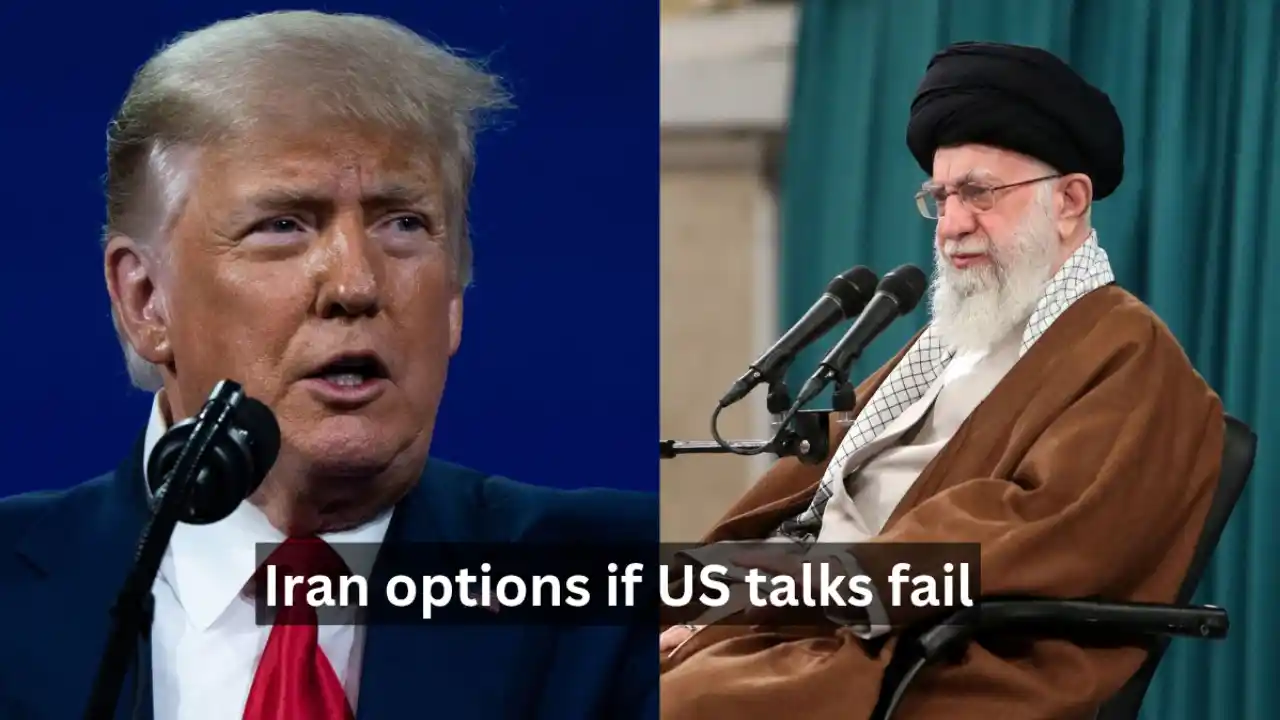
Iran options if US talks fail: Amid rising tensions with the United States, Iran so far appears to be trying to avoid direct confrontation. Tehran’s priority has been diplomacy, and it has followed a strategy of activating regional countries to build pressure on Washington. Iran has clearly stated that any attack on it could push the entire Middle East into the flames of war.
Meanwhile, countries such as Saudi Arabia, the UAE, and Jordan have made it clear that they will not allow their airspace or territory to be used for any potential US attack against Iran. This has limited America’s military options.
Iran has warned that if it is attacked, it could target American and Israeli military bases. In such a situation, bases located in Iraq, Bahrain, Qatar, the UAE, Saudi Arabia, Kuwait, Jordan, and Syria could be at risk.
How has Iran responded so far
In past confrontations, Iran’s response has often been measured and symbolic. In January 2020, after the killing of Qassem Soleimani, Iran warned the US before striking Iraq’s Ain al-Asad airbase. Similarly, during the 2025 Iran–Israel war, a warning was given before the attack on Qatar’s Al Udeid airbase.
However, the current situation is being seen as different. Iranian leadership has signaled that it could view any US attack as a direct threat to its survival. Recent unrest, along with comments from the US about seeking “new leadership in Iran,” has further increased Tehran’s concerns.
If talks fail, what can Iran do?
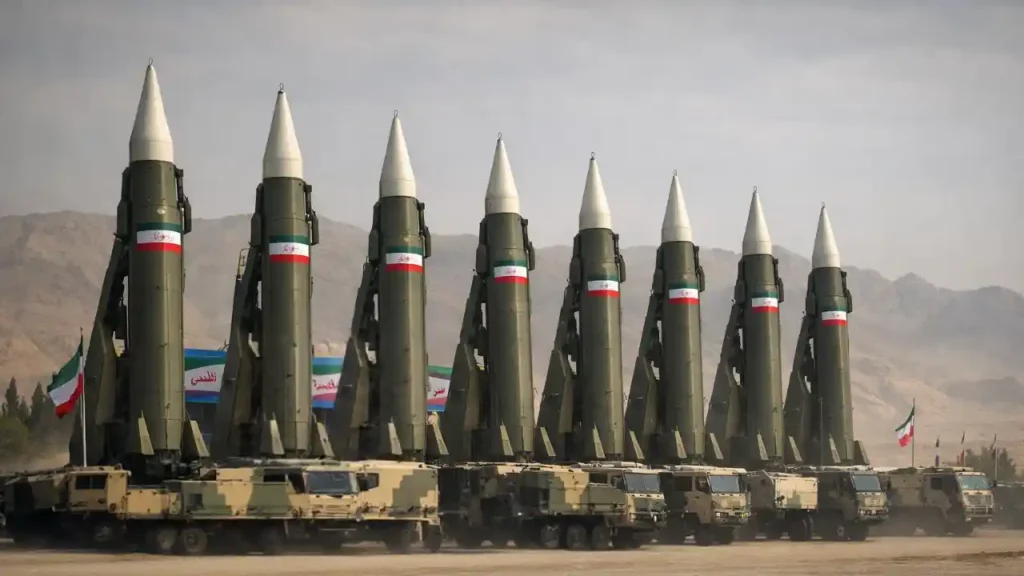
Use of ballistic missiles
According to estimates, Iran has more than 2,000 ballistic missiles, including short- and medium-range systems. These are within range of US bases in the region. During the war with Israel, some missiles were also able to penetrate air defense systems. The US does have anti-missile systems, but it would have to defend a much larger area.
Activation of regional allied groups
Iran has for years supported allied armed groups. These groups, present in Iraq, Lebanon, and Yemen, have played roles in regional tensions before. Although they have suffered significant losses in recent years, if they act together, they could pose a serious challenge to US bases.
Pressure on the Strait of Hormuz
Threatening to close the Strait of Hormuz has been a long-standing Iranian strategy. Nearly one-fifth of the world’s oil passes through this route. However, this is considered Iran’s last option, as it could damage its relations with major oil buyers like China and Gulf countries. This may be why this option has not been raised strongly in the current tensions.
Asymmetric retaliation strategy
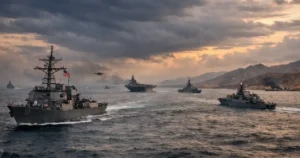
Iran knows it cannot match the US in conventional military strength. In such a case, it may adopt a strategy of using fast boats, drones, and swarm attacks to confuse enemy sensors and defense systems. The use of speedboats and drones in the Persian Gulf could be part of this strategy.