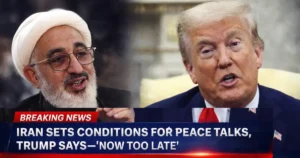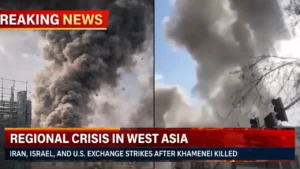

- Khamenei rejects protests as public anger
- Claims organized forces and external interference
- Thousands detained, death penalty concerns raised
- Global rights groups urge restraint and due process
Iran protests: Iran’s Supreme Leader has taken a hard line on the protests continuing across the country. He said it would be wrong to describe the current situation as public anger and that it should instead be seen as a planned attempt to weaken the Islamic system. Khamenei’s statement came at a time when the country is going through its most serious domestic tension in a long period.
According to Khamenei, the discontent visible on the streets is not spontaneous, but organized forces are working behind it. Without naming any country, he also pointed to the possibility of external interference. Political analysts believe this statement sends a message to security agencies and the judicial system to act with greater strictness.
Risk of death penalty
Human rights groups say that thousands of people have been detained after the recent protests. Iran’s laws provide for the death penalty under charges such as treason and “war against God.” Because of this, there is concern that those arrested could face harsh punishment and even execution.
Reasons for the protests
In recent months, anger has grown in the country over economic pressure, rising inflation, unemployment, and social restrictions. Protests with large participation from women and youth have become a challenge for the government. The ruling establishment is viewing these activities through the lens of national security.
Global reaction
There has been concern at the international level over these developments. , and several human rights organizations have appealed to Iran to show restraint, stop arbitrary arrests, and follow a fair legal process. Critics say that labeling dissent as a conspiracy and suppressing it has a direct impact on civil rights.
For now, the situation raises the question of whether there is any space left for peaceful protest in Iran, or whether every voice will be crushed by being seen as a threat to power.