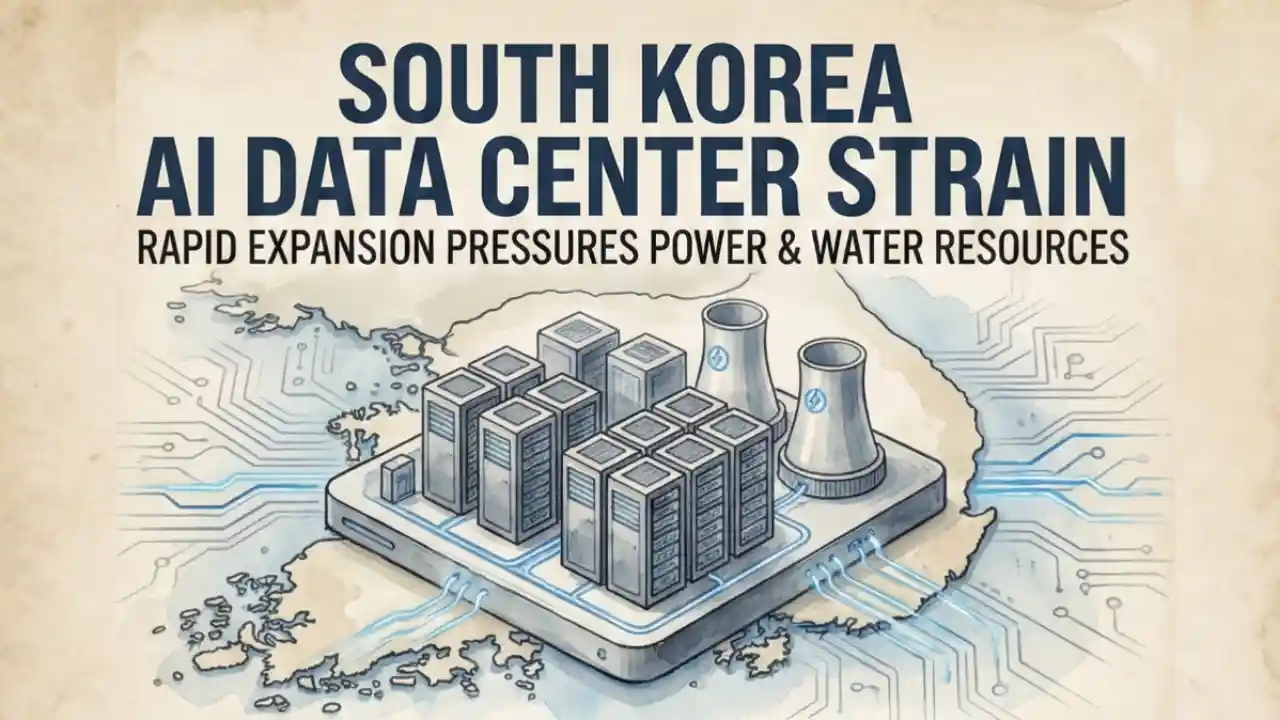
- Over 70 new facilities expected by 2028
- Power capacity may triple by 2030
- No mandatory public water usage disclosure
- Global data center demand rising sharply
Korea AI Data: The pace at which digital infrastructure related to artificial intelligence is expanding in South Korea has raised new concerns about energy and water management. Officials linked to the industry and analysts in the energy sector say that regulatory arrangements do not yet appear clear and strong compared to the growing number of data centers.
According to industry figures, there are plans to establish dozens of new AI-based data centers in different parts of the country over the next few years. It is estimated that by 2028, more than 70 new facilities could be added. A recent report related to energy analysis states that the total electricity capacity of domestic data centers could grow to more than three times the 2025 level by 2030. While the current capacity is around two thousand megawatts, it is assessed that by the end of the decade it could reach above six thousand megawatts.
However, along with this expansion of infrastructure, rules related to transparency and accountability are still limited. Experts say that at present there is no comprehensive national system in place that requires each data center to publicly disclose its electricity and water consumption. Similarly, there are no clear standards on how the cost of grid expansion and infrastructure should be shared. Existing assessments mainly focus on whether the power system will be able to handle new units or not, but public reporting on actual resource use and cost sharing is not mandatory.
The situation appears different in many parts of the world. At the global level, energy demand from data centers is continuously increasing. The International Energy Agency estimates that while total electricity consumption of these centers was a little over 400 terawatt-hours in 2024, by 2030 this figure could be more than double.
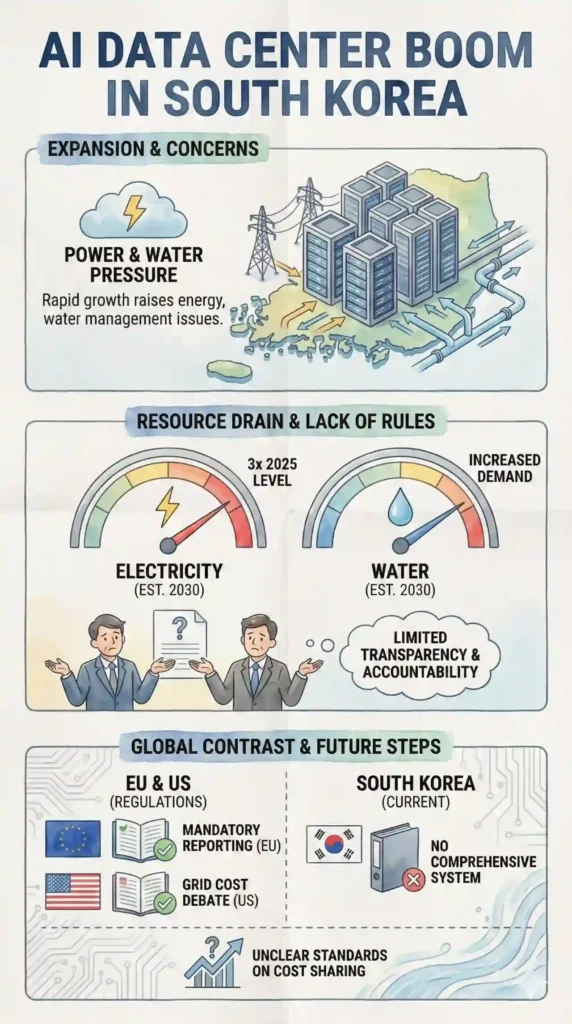
Keeping this rising consumption in mind, the European Union has amended its energy efficiency rules. Now data centers with IT loads above a certain limit have to report every year their electricity and water use, energy efficiency indicators, and the share of renewable sources. For units with large capacity, provisions such as heat recovery systems have also been added, and related data is compiled at national and European levels.
In the United States as well, the debate is focused on ensuring that the cost of grid expansion due to large data centers is not placed on ordinary consumers. According to some estimates, electricity consumption by data centers there could increase by 2028 to a level equal to the total electricity use of several mid-sized economies. The United Kingdom has linked approval of grid connections to local development funds and planning agreements, while the Netherlands has imposed limits in some areas on the establishment of large data centers to reduce pressure on the grid.