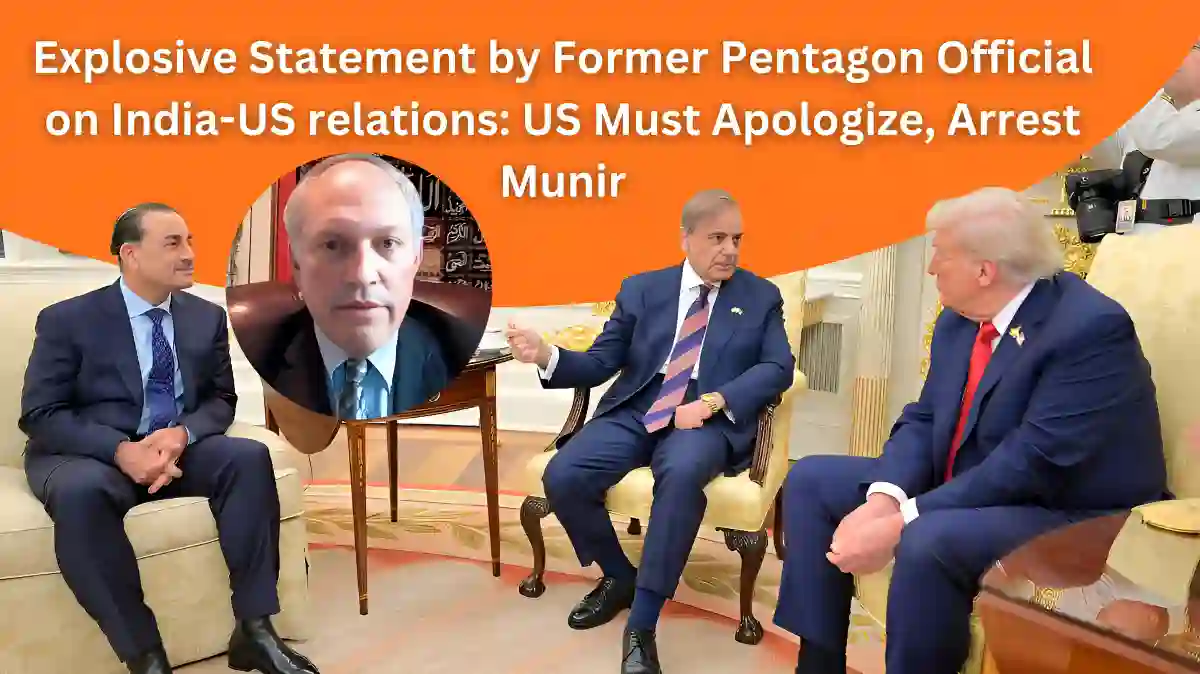
India-US relations: Amid escalating tensions between India and the United States, former Pentagon official Michael Rubin has made a sensational statement. In an interview with ANI, Rubin demanded a public apology from the US for its alleged ‘mistreatment’ of India over the past year. He described Pakistani Army Chief Field Marshal Asim Munir as linked to terrorism, asserting that if Munir visits the US, he should be arrested, not welcomed. Rubin also strongly advocated for declaring Pakistan a ‘state sponsor of terrorism,’ igniting a new debate in India-US relations.
This statement comes at a time when the Trump administration’s policies have pushed India closer to Russia. Rubin’s interview, conducted on December 5, has gone viral across social media and news channels. Questioning American foreign policy, the former official said there is no strategic rationale in embracing Pakistan. In India, his remarks are being appreciated for amplifying pro-India voices within the US.
Who is Michael Rubin? A Deep Insight into US Policy from the Pentagon Perspective
Michael Rubin is a Senior Fellow at the American Enterprise Institute (AEI) and has served in the Pentagon under the George W. Bush administration. A specialist in South Asia and the Middle East, Rubin has consistently criticized Pakistan-backed terrorism. After the India-Pakistan conflict in May 2025, he had praised India’s ‘Operation Sindoor,’ describing Pakistan as a “frightened dog.” His recent remarks are a direct critique of Trump’s Pakistan-leaning policies, highlighting internal dissent within the US.
Rubin stated, “The US should not grant Pakistan Major Non-NATO Ally status. Just designate it a state sponsor of terrorism.” He also mocked Munir’s June 2025 White House visit, where Trump honored him. Rubin believes such policies are against American interests and alienate strategic partners like India.
The May 2025 India-Pakistan Conflict at the Heart of Tensions
The May 2025 India-Pakistan clash is the root of the current tensions. On April 22, 2025, a terrorist attack by ‘The Resistance Front’ in Pahalgam killed 26 civilians. In response, India launched ‘Operation Sindoor’ on May 7, targeting nine Jaish-e-Mohammed and Lashkar-e-Taiba locations in Pakistan and PoK using BrahMos missiles and indigenous weapons. India claimed over 100 terrorists were eliminated without targeting Pakistani military or civilian facilities.
Pakistan retaliated with ‘Operation Bunyan-un-Marsus,’ involving drone and missile attacks, which were thwarted by India’s active air defense systems. A ceasefire was reached on May 10. Trump portrayed himself as a peacemaker, a claim that did not sit well with India. Rubin described this as a decisive defeat for Pakistan.
Asim Munir’s White House Honor Highlights Trump’s Pakistan Bias
In June 2025, Pakistani Army Chief Asim Munir was given a private lunch by Trump at the White House—the first such event for any Pakistani military chief. Trump credited Munir with averting the India-Pak crisis and even claimed he prevented a ‘nuclear war.’ Munir made a second visit in August. Rubin condemned this, stating that individuals like Munir deserve arrest, not honors, given their links to terrorism.
The incident sparked outrage in India. While Pakistan received US support, India faced pressure to halt Russian oil imports. The Trump administration imposed only a 19% tariff on Pakistan while targeting India.
Trump’s Tariffs and the Russia Card
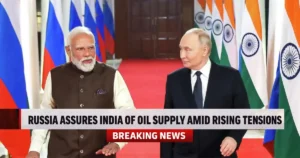
In August 2025, Trump imposed an additional 25% tariff on India’s Russian oil imports, taking the total to 50%, aiming to distance India from Russia. By November, US sanctions on Russian companies Rosneft and Lukoil reduced India’s imports from 1.7 million barrels per day to 1.1 million. Despite this, India maintained its strategic autonomy. During Putin’s visit to India on December 4–5, a commitment for ‘uninterrupted fuel supply’ was made. Rubin sarcastically remarked that Trump deserves a ‘Nobel Prize’ for pushing India closer to Russia, stating that his policies were driving India into Russia’s embrace. Currently, 65% of Americans disapprove of Trump’s foreign policy.
Also Read