
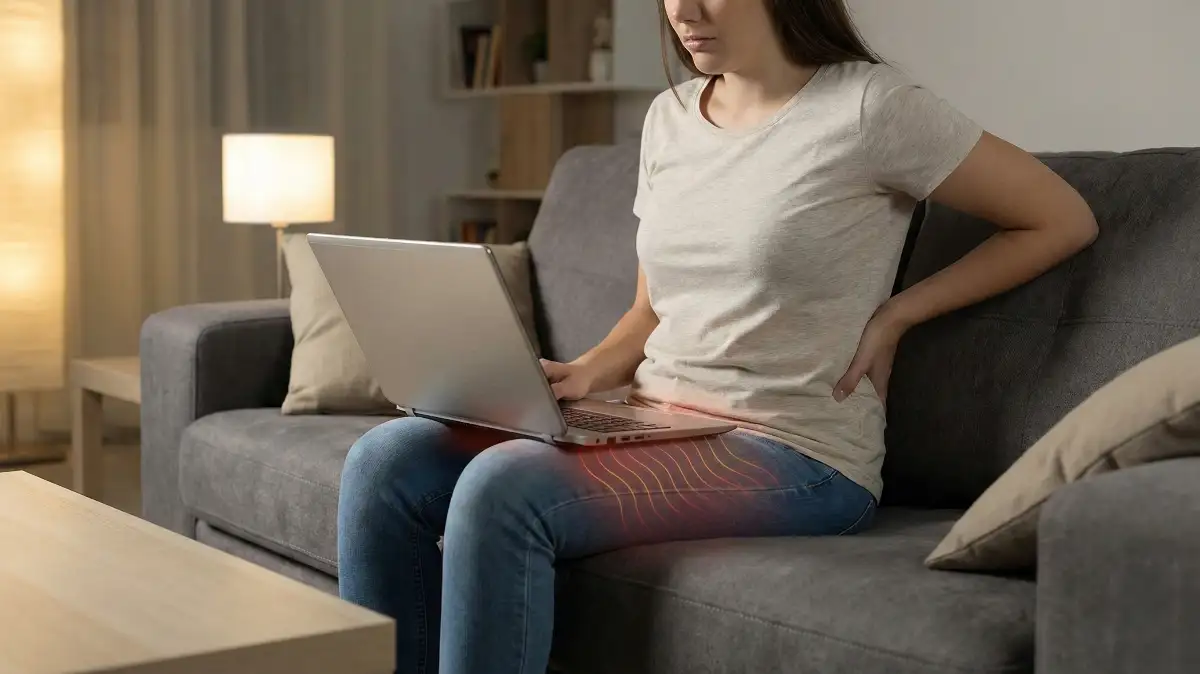
In today’s hyper-connected digital age, laptops have become an extension of our bodies. From remote work and online classes to binge-watching series in bed, we spend a significant portion of our lives glued to these screens. Due to their portability, the most convenient place to keep them is often right where their name suggests—on our laps. However, most users are oblivious to the severe Side Effects of Using Laptop on Lap.
While it may seem harmless and comfortable, medical experts and recent research findings warn that this habit is a silent health hazard. The combination of heat emission, electromagnetic radiation (EMF), and poor posture can cause gradual damage to your body, ranging from skin conditions to long-term fertility issues. In this comprehensive guide, we explore the top health risks associated with this common habit and how you can stay safe.
1. Poor Posture Increases the Risk of Pain and Injury
One of the most immediate and noticeable Side Effects of Using Laptop on Lap is the degradation of your posture. When a laptop is placed on the lap, the screen is positioned significantly lower than your eye level. This forces you to tilt your head forward and hunch your shoulders to view the screen comfortably. This unnatural position is medically referred to as “Tech Neck” or “Laptop Hunch.”
Maintaining this posture for extended periods can lead to a cascade of musculoskeletal issues:
- Cervical Strain: For every inch your head tilts forward, the pressure on your cervical spine increases by roughly 10 pounds. This can lead to chronic neck pain and stiffness.
- Lumbar Stress: Slouching on a couch or bed with a laptop removes the natural S-curve of the spine, putting immense pressure on the lumbar discs, which is a leading cause of lower back pain.
- Muscle Imbalance: Over time, the chest muscles tighten while the upper back muscles weaken, leading to a permanent hunchback posture.
The Fix: Ergonomics experts recommend that the top of your screen should always be at or slightly below eye level. Using a proper desk or an adjustable Laptop Stand is the best way to maintain spinal alignment.
2. Impact on Reproductive Health
Perhaps the most alarming risk associated with prolonged laptop use on the lap is its potential impact on fertility. Laptops generate a significant amount of internal heat, and they also emit low-frequency electromagnetic fields (EMFs). Because the device is placed directly over the reproductive organs, the risk is direct and concerning.
Risks for Men
The testes are positioned outside the body because they need to be kept cooler than the core body temperature for optimal sperm production. Studies have shown that balancing a hot laptop on the lap can increase the scrotal temperature by up to 2.8°C to 3°C in just one hour. This condition, known as “Scrotal Hyperthermia,” can lead to:
- Reduced sperm count.
- Decreased sperm motility (ability to move).
- DNA fragmentation within the sperm cells.
Risks for Women
While the risk is more physically obvious in men, women are not immune. Prolonged exposure to heat and radiation in the pelvic region may affect ovarian function. Some medical reports suggest that continuous EMF exposure could potentially disrupt hormonal balance and affect the developing fetus during pregnancy. Doctors strongly advise pregnant women to keep laptops away from their abdomen.
3. Erythema Ab Igne: The “Toasted Skin Syndrome”
Did you know your laptop can literally “toast” your skin? There is a documented medical condition called Erythema Ab Igne, colloquially known as “Toasted Skin Syndrome.” This occurs when the skin is exposed to prolonged, low-grade heat sources—like the underside of a laptop processor or battery.
Because the heat isn’t high enough to cause an immediate burn, users often ignore it. However, over time, this exposure causes changes in the skin’s microscopic structure.
- Symptoms: It begins as a mottled, sponge-like redness on the thighs where the laptop rests. Over time, these patches can turn dark brown or gray.
- Long-term Damage: In severe cases, this pigmentation can become permanent. While rare, chronic inflammation from this condition has the potential to develop into more serious skin lesions.
Dermatologists recommend placing a barrier, such as a laptop tray or a cushion, between the device and your skin to prevent this thermal damage.
4. Potential Risk of Cancer
The debate regarding the carcinogenic potential of non-ionizing radiation emitted by laptops and Wi-Fi signals is ongoing. While current scientific consensus does not definitively prove that laptops cause cancer, many experts advocate for the “Precautionary Principle.”
Since laptops are often placed directly against the skin near vital organs, the cumulative exposure to EMFs over years or decades is a concern. Continuous cell stress from heat and radiation may contribute to abnormal tissue growth or DNA damage in sensitive areas. Until long-term studies provide a conclusive answer, maintaining a safe distance from the source of radiation is considered a wise health practice.
5. Impact on Sleep and Mental Health
The Side Effects of Using Laptop on Lap are not limited to physical ailments; they extend to your neurological health as well. Laptops emit high-energy visible (HEV) light, commonly known as Blue Light.
When you use a laptop on your lap, particularly in bed or on a sofa in the evening, the screen is usually closer to your eyes than it would be on a desk. This intense exposure suppresses the production of Melatonin, the hormone responsible for regulating your sleep-wake cycle.
- Insomnia: Difficulty falling asleep or staying asleep.
- Digital Eye Strain: Symptoms include dry eyes, blurred vision, and headaches.
- Mental Fatigue: Poor sleep quality leads to anxiety, irritability, and lack of focus the next day.
Essential Safety Tips for Laptop Users
Technology is essential, but it shouldn’t come at the cost of your well-being. Here are actionable tips to mitigate these risks:
- Switch to a Desk: Whenever possible, place your laptop on a hard surface like a table or desk. This ensures proper ventilation for the device and proper posture for you.
- Use a Cooling Pad: If you must work from a couch, use a high-quality cooling pad. It acts as a physical shield against heat and radiation.
- Create Distance: Use an external keyboard and mouse. This allows you to keep the laptop screen at a distance, reducing eye strain and radiation exposure.
- Follow the 20-20-20 Rule: Every 20 minutes, look at something 20 feet away for 20 seconds to relax your eye muscles.
- Digital Detox Before Bed: Avoid using laptops at least one hour before sleeping to protect your melatonin levels.
Also Read: