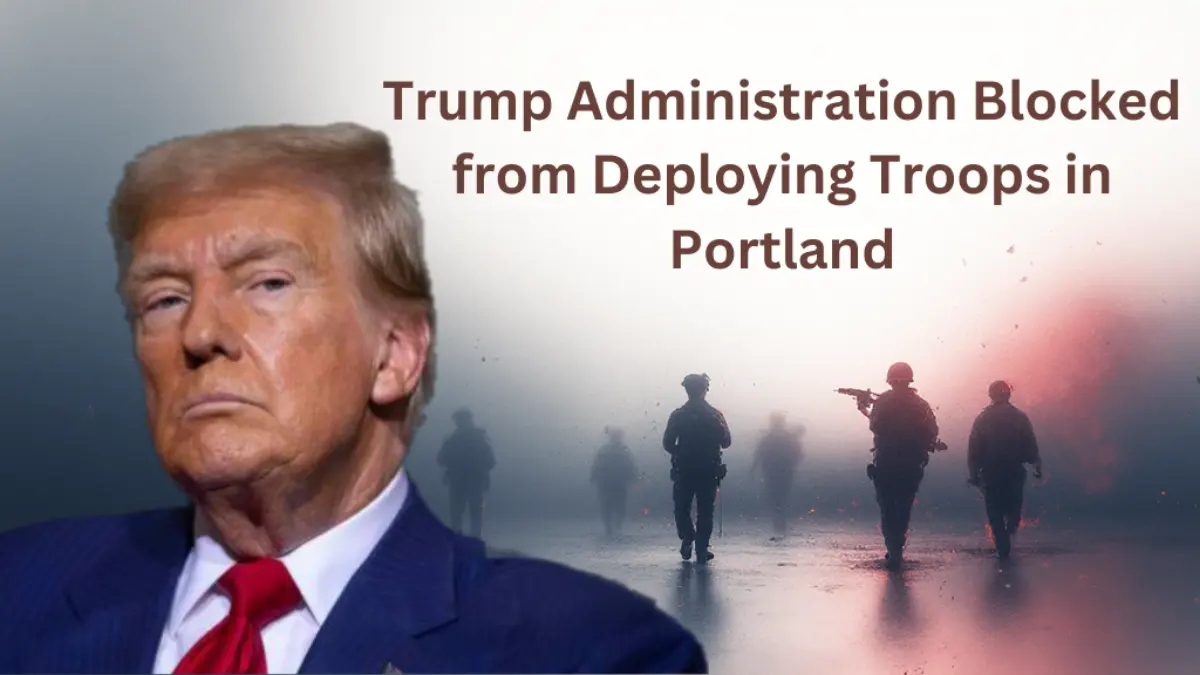
A federal judge in Oregon has dealt a significant blow to President Donald Trump. Judge Karin Immergut has barred the Trump administration from deploying National Guard troops in Portland. The court stated that the administration failed to provide concrete and credible evidence showing that the protests in the city had gotten out of control, necessitating a military presence. The injunction will remain in effect at least until November 7, 2025, pending the judge’s final decision.
Decision After Three-Day Hearing
The case was heard over three days, during which both sides presented detailed arguments on the legality of the Trump administration’s actions. Judge Immergut reviewed over 750 pieces of evidence and documents. In her order, she clarified that the protests in the city were not extremely violent and there was no evidence of “insurrection” or large-scale “attacks” that would legally justify the deployment of the National Guard. The court also stated that the president had violated federal law and infringed upon Oregon’s state sovereignty.
Protests in Portland and the Administration’s Actions
Portland has seen large-scale protests for months outside the U.S. Immigration and Customs Enforcement (ICE) building. The Trump administration planned to deploy the National Guard to control these demonstrations, claiming that the protests posed a threat to federal officials and property, necessitating military intervention. However, local authorities and the state government deemed this action inappropriate and filed a lawsuit to block the deployment.
State-Federal Dispute and Federal Powers
The case has become a key example of the division of powers between federal and state governments. Judge Immergut noted in her order that the deployment of the National Guard without sufficient and concrete justification constituted federal interference that directly infringed upon state sovereignty. The court also emphasized that, under U.S. law, the National Guard can only be federally activated in cases of severe situations like “insurrection” or “attack,” which did not exist in this instance. The ruling also clarifies the legal limits of federal military intervention.
Judicial Process and Next Steps
Following the hearing, the judge extended the temporary injunction until Friday, pending the final ruling. The Trump administration has indicated plans to appeal the decision in a higher court. Additionally, the court blocked plans to send National Guard troops from California and other states to Portland on similar grounds. The case has become a symbol of the ongoing struggle between presidential executive powers and states’ rights in the U.S.
Government Statements and Reactions
Oregon’s governor and Portland’s mayor welcomed the court ruling, stating that it upholds constitutional rights. Meanwhile, the Trump administration described the measure as necessary to ensure security. A White House spokesperson stated that the president acted within his rights to protect federal property and personnel, but the court ruled that the action violated legal boundaries.
Rising Debate and Social Media Discussion
The case has attracted significant attention in national and international media. Social media discussions have intensified around civil rights, federal powers, and the freedom to protest. Political analysts believe the case could also influence upcoming elections and President Trump’s policies.
Conclusion
Through its detailed order, the U.S. court has demonstrated transparency and judicial independence. The ruling makes it clear that any administration must act within constitutional limits. The decision could serve as a benchmark for maintaining balance between state and federal authorities. The legal battle and its political implications will continue to unfold in the coming days.
Also Read