- Limited air strikes planned in first phase
- Nuclear program and missiles central concerns
- Broader military campaign possible in phase two
- US military presence increases in region
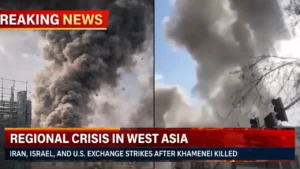
US Iran tensions: After meetings in Washington, US President Donald Trump, under the Trump Iran Plan, is considering a two-phase military strategy against Iran. According to reports, this plan is still under discussion and its objective is to pressure Tehran to accept new nuclear conditions. If Iran does not agree, the possibility of broader action is being indicated.
What is the two-phase plan?
According to sources, in the first phase a strategy of limited air strikes has been prepared. The scope of these attacks may remain limited to some selected military bases or government centers. The objective is clear — to signal to Iran that the Trump administration’s warnings are not just statements. It is being said that this action is possible in the coming days. However, it has not been officially confirmed.
Trump’s key conditions
President Trump wants Iran to send all of its enriched uranium out of the country. Along with this, the stockpile of long-range missiles should be limited. The US is also demanding that Tehran stop supporting groups like Hezbollah and the Houthis.
If even after the first phase Iran’s Supreme Leader Ali Khamenei and the government there do not agree to these conditions, then the second phase can be approved. This phase is being described as a ‘broad campaign,’ in which Iran’s military capacity and facilities linked to the regime can be targeted.
Is regime change also a goal?
Experts believe that this time the matter may not remain limited to nuclear sites only. Since the 1979 Islamic Revolution, Iran’s current regime is being considered in a weak phase. In such a situation, some analysts are also linking it to a possible strategy of regime change.
US military buildup in the Middle East
In the past few weeks, the US has increased its military presence in the region. More than 100 fighter aircraft, a dozen warships, and two aircraft carrier strike groups — USS Gerald Ford and USS Abraham Lincoln — have been deployed. It is estimated that the number of US troops in the area may reach around 40,000.
According to defense experts, this preparation is considered sufficient for a campaign that may last several weeks. However, it is still not clear whether this is a strategy to build pressure or a step toward real military action.
Room for a diplomatic solution?
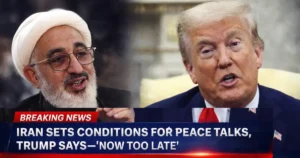
Recently, after a meeting with top advisers in the White House Situation Room, Trump said at the ‘Board of Peace’ meeting that the situation will become clear in the next 10 to 15 days. He said, “They will have to make a deal, otherwise it will be very bad.”
On the other hand, after the recent talks in Geneva, Iran has not yet accepted Trump’s conditions. According to reports, Tehran is preparing to present a new written proposal in the next two weeks. Now all eyes are on the coming days, when it will become clear whether this confrontation will be resolved through a diplomatic route or whether the situation will move toward a major military turn.