- War enters fourth year without breakthrough
- Heavy losses for limited territorial gains
- Drones reshape battlefield dynamics
- Peace talks continue, agreement remains distant
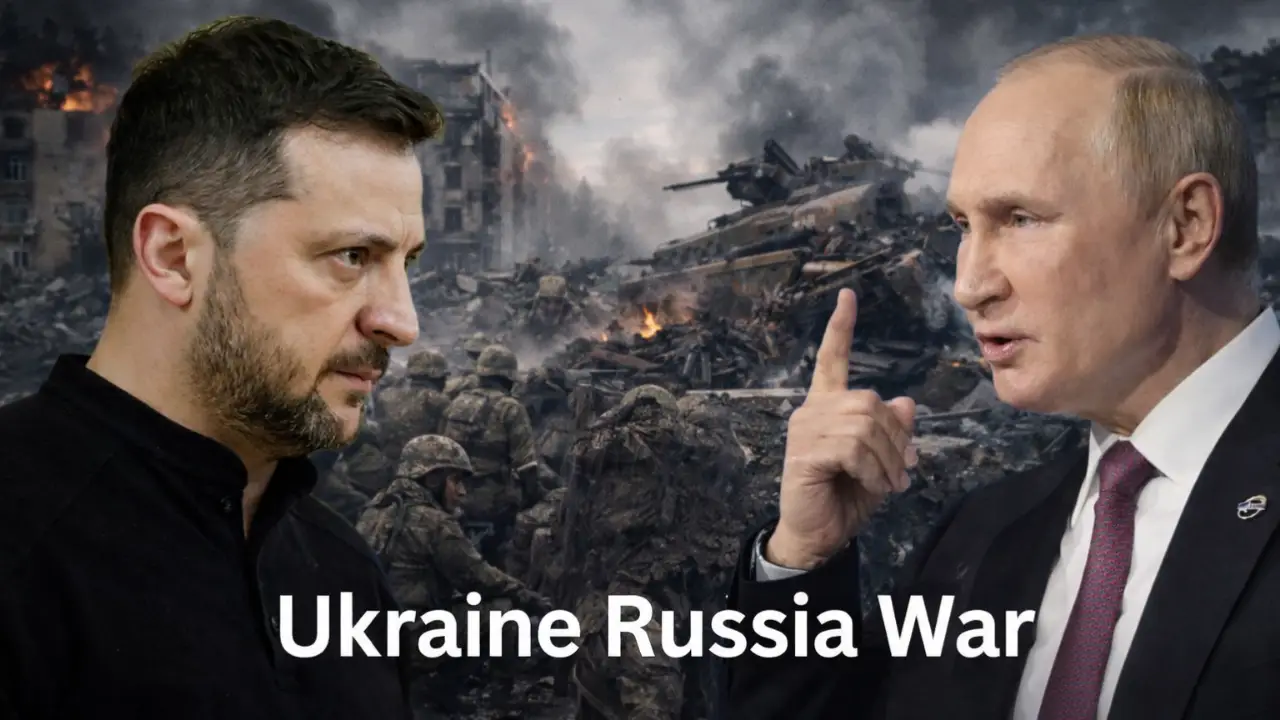
Life continues in Kyiv’s markets, children go to school, shops open but every night the sound of sirens reminds people that the Ukraine Russia War has not ended. The conflict that was expected in February 2022 to be settled in a few days has now become the longest and most destructive modern war in Europe’s history. Among trench lines, heavy shelling and tired soldiers, no decisive turn is visible. Around 2 million soldiers from both sides have been killed, wounded or gone missing a cost that perhaps no one had imagined.
A big price is being paid for a small piece of land
On the outskirts of Pokrovsk, there is a road on which in the past two years Russian soldiers have advanced on average 70 meters per day. This strategic transport hub is still not fully in Russia’s hands. After two years of fighting in the Donetsk region, the total gain is just 50 kilometers.
The full-scale attack launched by Russia on Ukraine crossed 1,418 days last month. This is the same duration in which the Soviet Union defeated Nazi Germany in the Second World War. But unlike that decisive advance eight decades ago, this time Moscow has so far not succeeded in taking full control of its neighbor’s eastern industrial region.
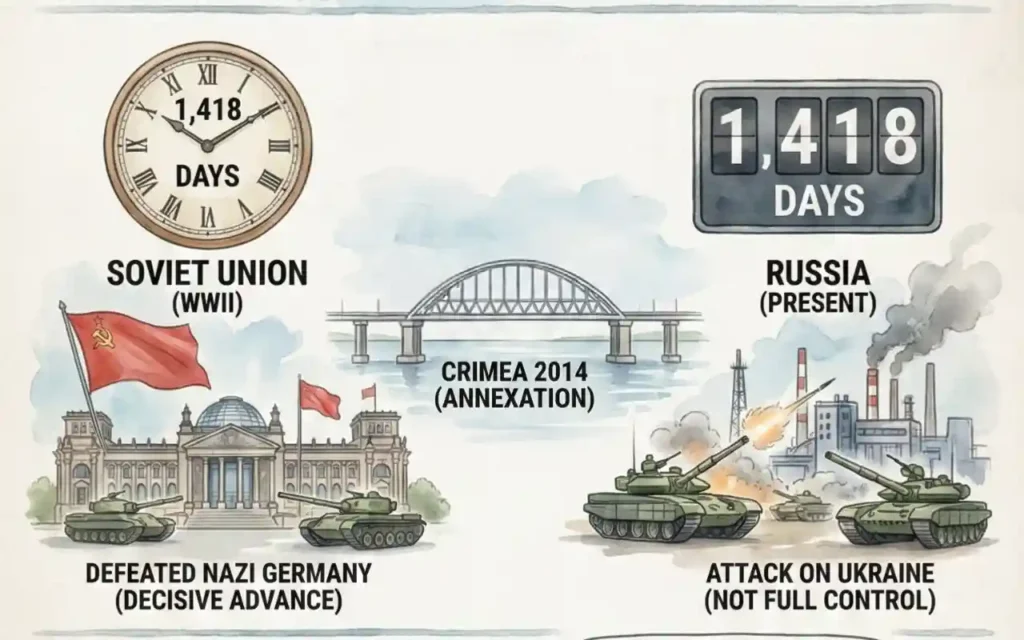
Since the illegal annexation of Crimea in 2014, Russia has taken control of about 20 percent of Ukraine’s territory, but it has paid a price for every kilometer. According to the Washington-based Center for Strategic and International Studies, Russia’s military casualties may have reached 1.2 million, including about 325,000 dead. Ukrainian military casualties are estimated at up to 600,000. Since the Second World War, no major power has suffered losses on this scale. NATO Secretary General Mark Rutte’s remark comparing Moscow’s advance to the speed of a “garden snail” is close to reality.
Fewer tanks, more drones and trenches are now visible
On the 1,200-kilometer-long front line, the fighting today is completely different from the initial picture. Then there was the roar of tanks and the rapid movement of large formations, now small groups of two or three soldiers crawl into ruined towns trying to infiltrate.
For the first time in military history, drones have changed the entire character of war. It is now almost impossible for either side to secretly gather large numbers of troops. From the beginning, Ukraine turned drones into a weapon to counter Russia’s heavy firepower. In response, Russia deployed long-range drones connected by optical fiber to avoid electronic jamming, with a strike range reaching up to 50 kilometers from the front. Delivering supplies and evacuating the wounded is now as dangerous as fighting itself—because drones hover over supply routes as well. Russian heavy artillery and glide bombs have made this picture even more grim.
Electricity, oil and winter the war has now reached everyday life
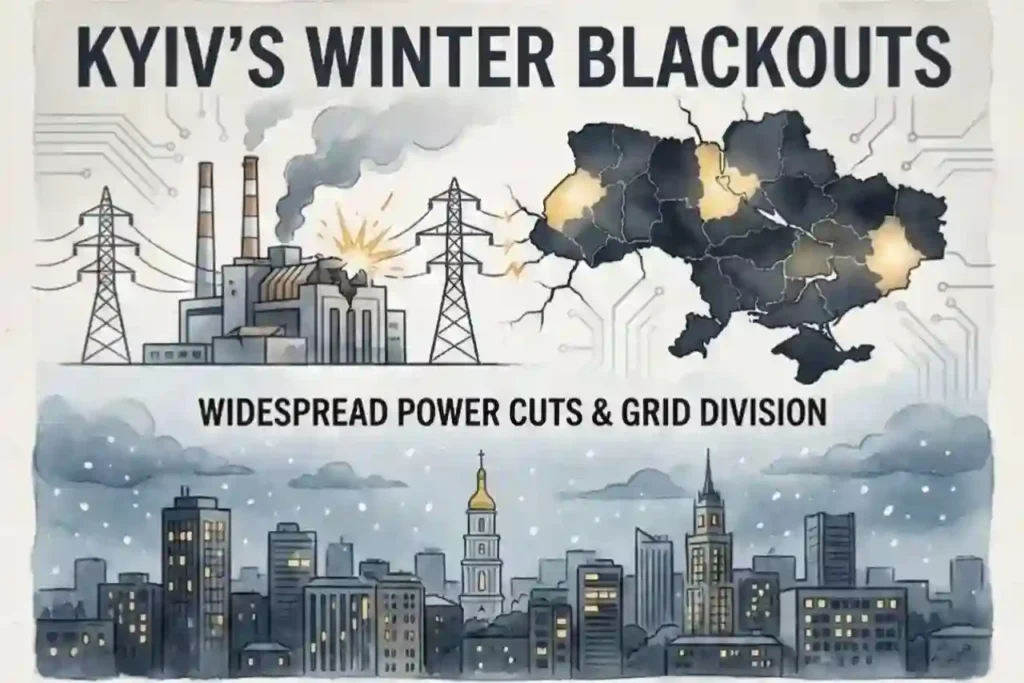
This winter, electricity in many areas of Kyiv was limited to a few hours. Russia targeted the energy system and broke power lines in such a way that Ukraine’s entire grid was divided into separate parts. Ukrainian officials described this period as the most difficult so far.
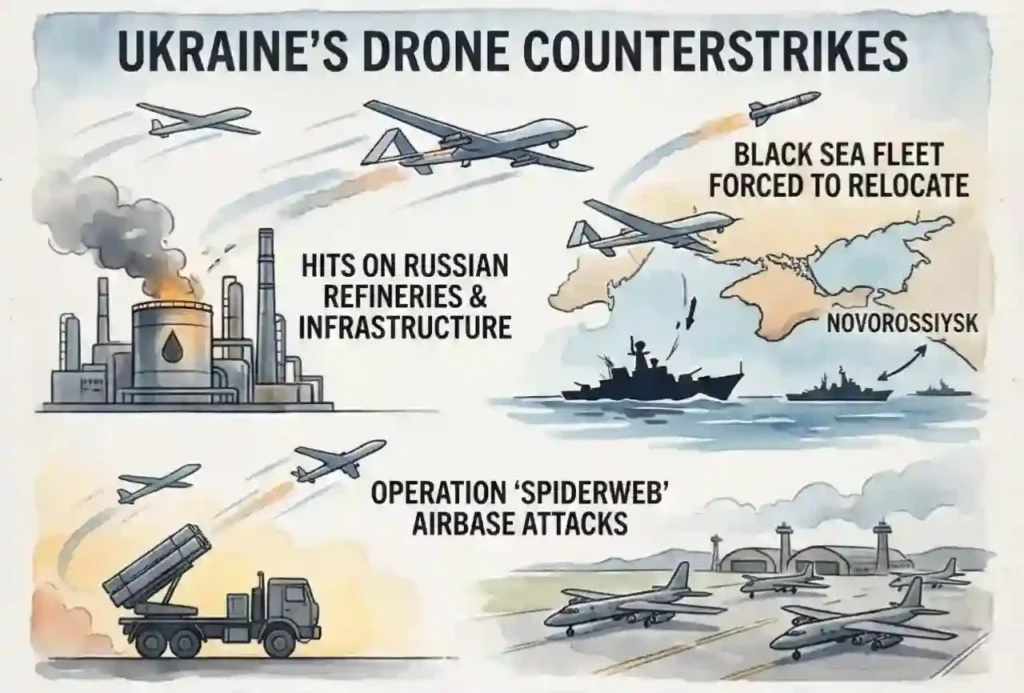
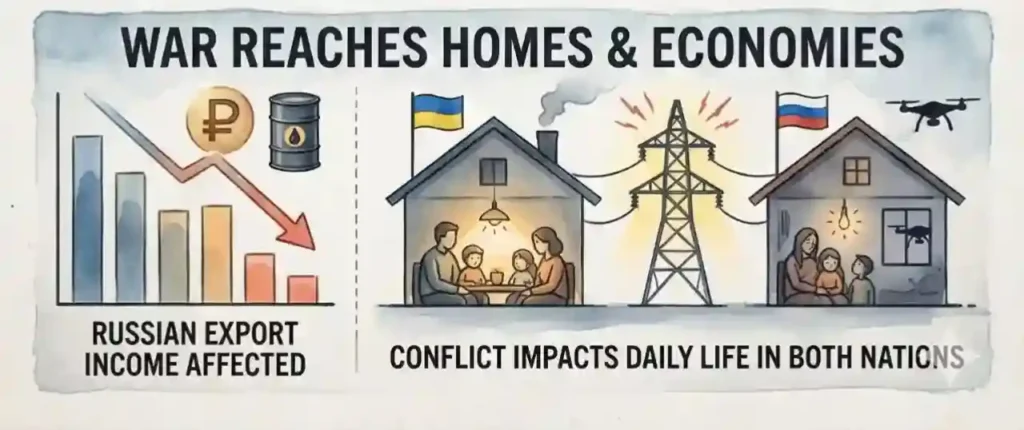
But Ukraine did not sit quietly. Long-range drone strikes hit Russia’s oil refineries and energy infrastructure, affecting its export income. In the Black Sea, Ukrainian missiles and drones sank several Russian warships and forced Russia to move its fleet from Crimea to Novorossiysk. In June, under the “Spiderweb” operation, drones launched from trucks targeted long-range bombers at several Russian airbases—this was a major shock for the Kremlin.
The war is no longer only on the front line, it has reached homes and power stations in both countries.
The United States wants a deal, but both sides have their own conditions
US President Donald Trump, who claimed he would end the war in one day, is trying to mediate, but the conditions of the people sitting at both ends of the table clash with each other.
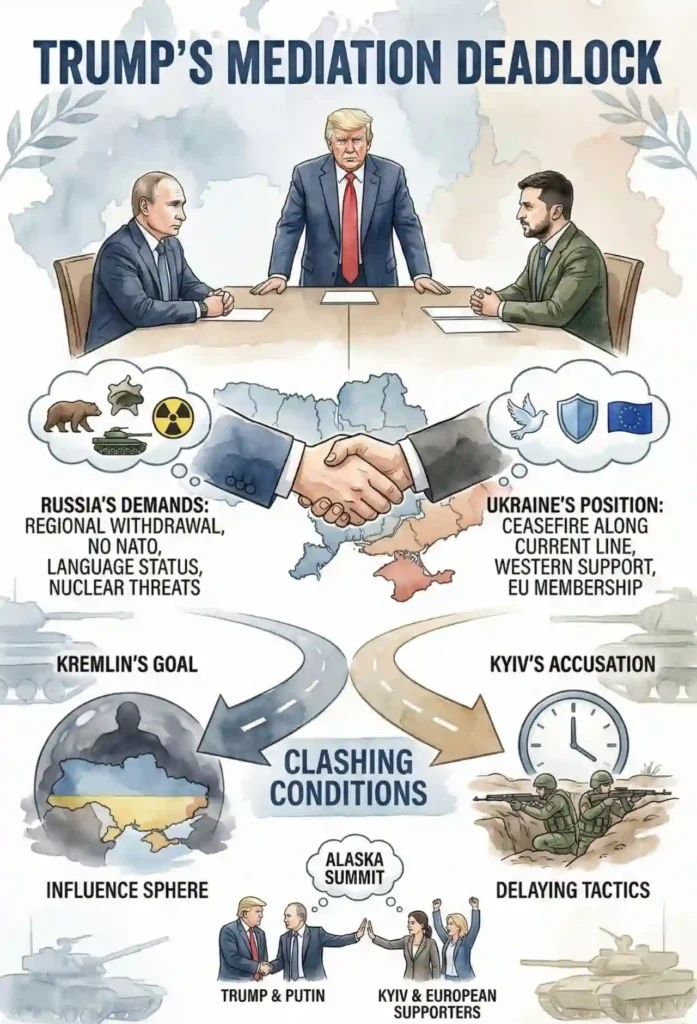
Putin demands that Ukraine withdraw its forces from the four regions that Russia claims to have annexed—even though it does not fully control them. Along with this, giving up the attempt to join NATO, reducing military structures and granting official status to the Russian language are also among his conditions. The repeated mention of nuclear weapons has been part of a strategy to stop Western support. Russia has outright rejected the deployment of European peacekeepers, although it has kept the door open for European Union membership.
Zelensky wants a ceasefire along the current line of contact. According to Tatyana Stanovaya of the Carnegie Russia Eurasia Center, the territorial question is important, but Moscow’s real goal is to create a Ukraine that remains entirely within Russia’s sphere of influence. Ukraine and its allies accuse Russia of dragging out talks to gain ground on the battlefield. The Kremlin’s counterargument is that the understanding reached between Trump and Putin at the Alaska summit is being weakened by Kyiv and its European supporters.
There is talk of elections too, but the path is not clear
The White House has reportedly set a deadline to end the war by June. Zelensky has indicated that presidential elections are possible if there is a ceasefire and security guarantees, despite martial law. There has even been an idea of linking the election to a referendum on a peace agreement.
But the ground reality narrows these possibilities. Zelensky has expressed doubt over the US proposal to make the eastern region a free economic zone. Between Putin’s demand for Ukrainian withdrawal from Donetsk and Zelensky’s clear disagreement, the scope for a quick agreement appears limited. The negotiating table is being set, but those who sit at it are not ready to give up their respective lines.
Economic pressure is increasing, yet there are no signs of the war stopping
Western sanctions and the burden of a long war have put Russia’s economy under pressure—inflation has risen, there is a shortage of workers and the growth rate is almost at a standstill. Fresh US sanctions on Russian oil exports have increased this pressure further.
But a point made by Richard Connolly of the Royal United Services Institute is worth noting: Russia’s economy may be less capable and less promising than before, but it is in a position to continue the war. Weapon production has increased in defense factories. By giving relief to key groups such as soldiers and industrial workers, social unrest has been kept limited. The power structure is strong enough that economic hardship is not turning into political change.