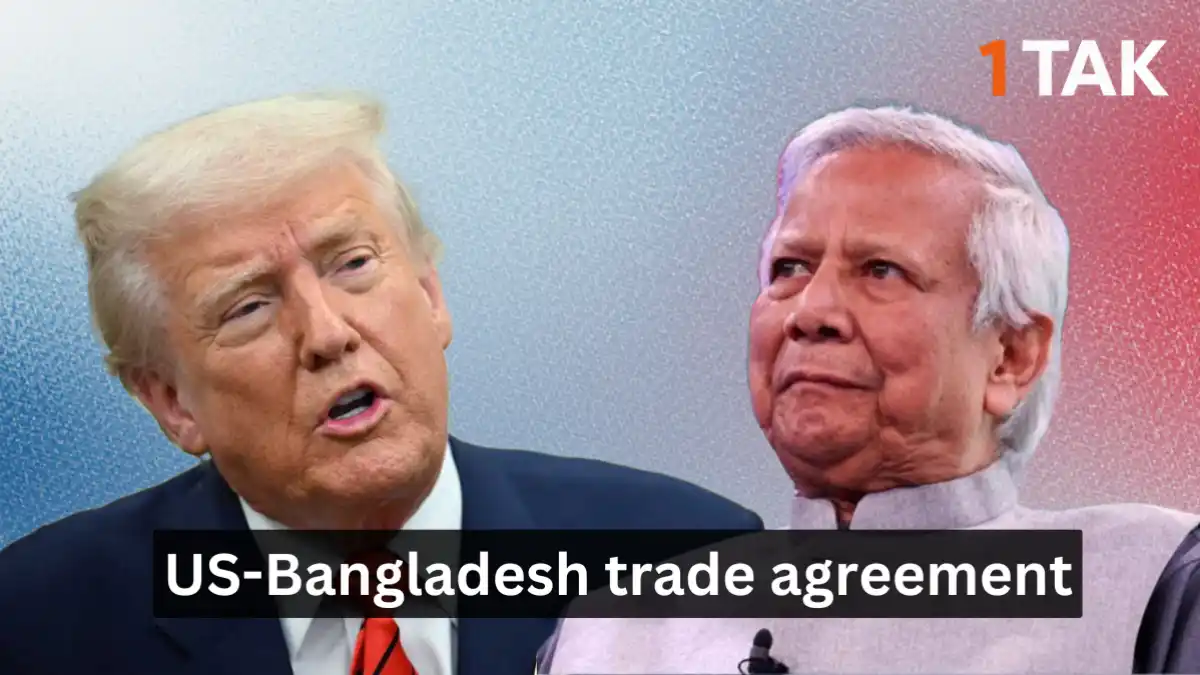
US-Bangladesh trade agreement: The new trade agreement signed between the United States and Bangladesh is creating movement in the trade equations of South Asia. After this agreement, concerns have emerged regarding India’s textile and yarn industry. Experts believe that it may impact India’s exports and the trade of raw materials.
Main Points of the Agreement
On behalf of Bangladesh, Commerce Adviser Sheikh Bashiruddin and National Security Adviser Khalilur Rahman signed the agreement, while from the American side, US Trade Representative Ambassador Jamieson Greer signed it.
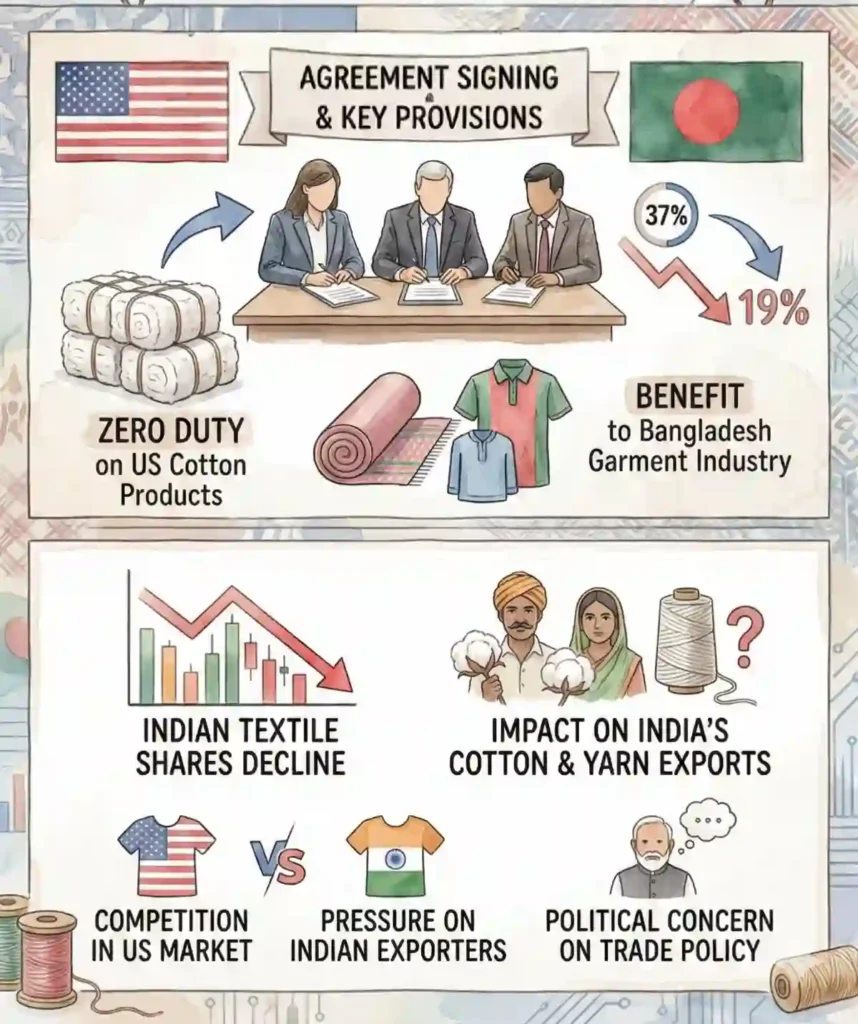
After nearly nine months of talks, the agreement includes the United States agreeing to reduce the reciprocal tariff imposed on Bangladesh from 37 percent to 19 percent. Earlier, this rate had been brought down to 20 percent.
An important provision of the agreement is that certain textile and apparel products made from American cotton and synthetic fibers will receive duty-free entry into the US market. This is expected to directly benefit Bangladesh’s garment industry.
Reaction from Both Countries
The American side described the agreement as strengthening bilateral trade relations. Ambassador Greer appreciated the efforts of the Bangladeshi team and said that this agreement will align Bangladesh with US trade policy.
Bangladesh’s Commerce Adviser Sheikh Bashiruddin called it an important step toward expanding economic relations. Meanwhile, according to chief negotiator Khalilur Rahman, the reduction in tariffs and zero duty on special products will give exporters a competitive edge.
Market Reaction in India
Within hours of the announcement of the agreement, shares of Indian textile and yarn companies registered a decline. Investors fear that the concessions given to Bangladesh in the US market may affect India’s share.
India and Bangladesh have long been competitors in global garment exports. The United States is a major market for both countries. In such a situation, with the benefit of zero tariffs, Bangladeshi products may become relatively cheaper, increasing the possibility of pressure on Indian exporters.
Impact on Cotton and Yarn Trade
India is a major supplier of cotton yarn to Bangladesh. In the financial year 2024-25, India exported cotton yarn worth 1.47 billion dollars to Bangladesh. Cotton supply has also continued on a large scale.
Experts believe that if Bangladesh increases the use of American cotton, it may affect India’s yarn industry and cotton farmers. Chandrima Chatterjee, Secretary General of the Confederation of Indian Textile Industry, has indicated that the immediate impact of this agreement may be seen in the cotton yarn trade.
Expert Opinion
Experts believe that this agreement may further intensify regional competition. According to them, the United States is promoting exports of its raw materials, and this may give Bangladesh additional benefit. However, they say that in the long term, the impact will depend on how the agreement is implemented on the ground.
According to economist Professor Biswajit Dhar, Bangladesh has been a large market for Indian yarn. If the use of American inputs increases there, Indian exports may decline. He also says that the growing trend of bilateral agreements is increasing competition among developing countries.
Political Reaction
Political reaction has also been seen in the country regarding the agreement. Congress leader Pawan Khera questioned the government’s trade policy and said that the zero duty provision may become a challenge for the Indian textile industry.
Will It Affect Relations?
Strategic and economic partnership between India and Bangladesh has been deep. Observers say that despite trade competition, both countries have several areas of cooperation. However, in the current situation, the possibility of tension regarding the textile sector cannot be ruled out.