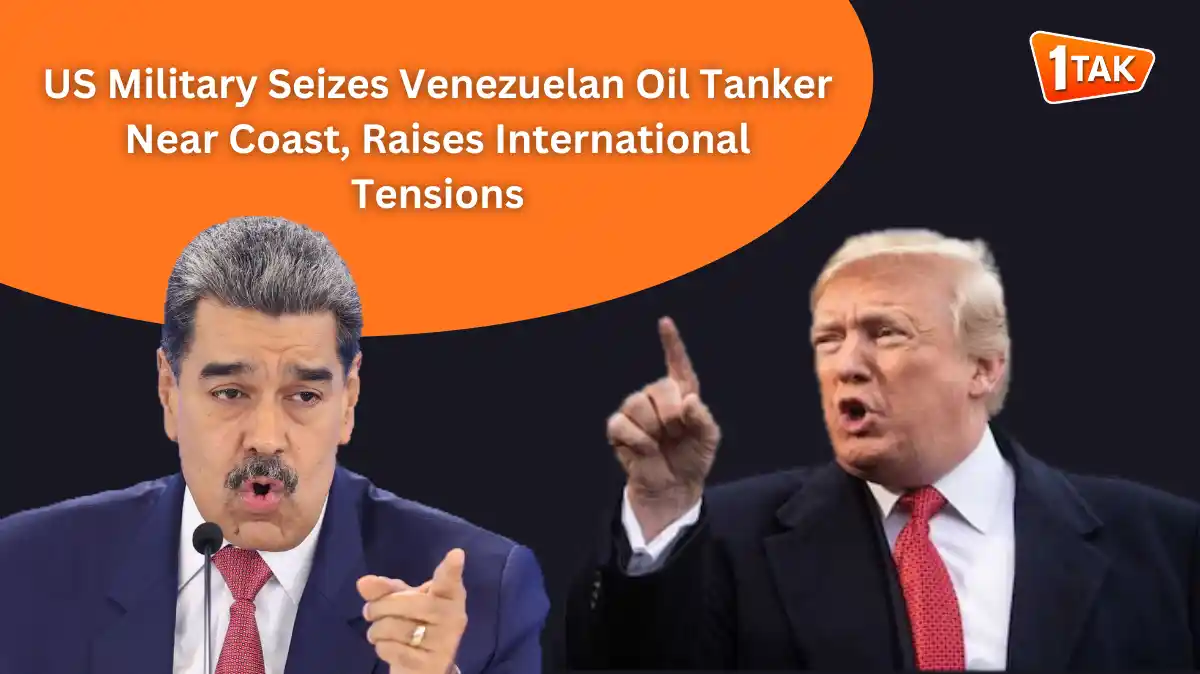
On December 10, 2025, a major confrontation emerged between the United States and Venezuela in international waters when the US military seized the Venezuelan oil tanker ‘Skipper’ near the country’s coast. Previously known as ‘Adisa’, the tanker was transporting crude oil from Venezuela to Asia, passing through Cuban waters during its voyage.
According to US officials, the operation was part of a long-running mission aimed at cracking down on the “illegal oil trade in violation of sanctions.” US President Donald Trump confirmed the incident, calling it “the largest seizure operation to date.”
Operation ‘Skipper’: Armed Forces Board from Helicopters
The US Department of Defense stated that the operation was carried out through the joint efforts of maritime security agencies — Coast Guard, Homeland Security, FBI, and the Defense Department.
Armed personnel were deployed via helicopter to secure the vessel, completing the operation without any clash or casualties.
US Attorney General Pam Bondi said that the ship had been involved for years in smuggling Venezuelan and Iranian oil and channeling financial support to groups like Hezbollah and the Islamic Revolutionary Guard Corps (IRGC). She stated, “This seizure is not just a warning to lawbreakers but a challenge to the global terrorism financing network.”
President Trump also described the action as a step toward “breaking the backbone of the Maduro regime” and “ending illegal oil trading.”
White House Strategy to Increase Pressure
During a press briefing at the White House, Trump announced, “We have seized a major oil tanker off the Venezuelan coast. This is just the beginning.”
He said the move is part of a broader US policy to increase economic and diplomatic pressure on the Nicolás Maduro government.
US sanctions, in place since 2019, are now being enforced more strictly. The Trump administration believes Venezuela’s oil trade is connected to cartel networks involved in drug trafficking and terrorism financing.
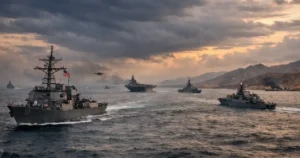
Currently, several US warships, including the USS Gerald Ford aircraft carrier, along with fighter jets, are deployed in the Caribbean Sea conducting “armed campaigns against narco-trafficking.”
There are also indications that the Trump administration is considering a possible land operation, although no official confirmation has been made.
Turmoil in Oil Markets
The news of the seizure immediately caused volatility in international oil markets.
Brent Crude rose 0.4% to $62.21 per barrel, while WTI closed at $58.46 per barrel. Prices continued to rise the following day, though some decline occurred due to reports on Russia-Ukraine peace talks.
Analysts noted that a halt in Venezuelan oil exports could trigger global supply shortages. Since nearly 90% of the country’s revenue comes from oil exports, the seizure could deal a significant economic blow.
However, some experts pointed out that record-high US production — 13.6 million barrels per day — ensures global fuel supply remains relatively secure. Nevertheless, Asian buyers may now access Venezuelan oil at discounted rates, as many shipping companies may hesitate to handle the cargo.
Venezuela’s Response
In an official statement from Caracas, the Venezuelan government accused the United States of “maritime piracy and blatant theft.”
The Ministry of Foreign Affairs stated that the action violates international law and the principles of national sovereignty.
President Nicolás Maduro condemned the Trump administration, saying:
“This is a conspiracy to destabilize our government and plunder our resources. We will give a decisive response to American imperialism.”
The government also announced that it would raise the matter at the United Nations General Assembly, International Maritime Organization (IMO), and other international platforms.
Russia Shows Support, Putin Calls Maduro
The following day, December 11, 2025, Russian President Vladimir Putin spoke with Nicolás Maduro by phone, assuring Venezuela of full support.
A Kremlin statement read, “Russia stands firmly with Venezuela to protect its sovereignty and national interests.”
Russia has long been a key ally of Venezuela, participating in economic, military, and energy sectors. Analysts view this move as a signal of a new energy-power rivalry between the US and Russia.
Global Impact
No further seizures have occurred so far, but international oil markets remain volatile. Investors are closely watching upcoming reports from the IEA (International Energy Agency) and OPEC, scheduled for release next week.
Analysis
Experts believe the US action is not merely a law enforcement measure but part of a geopolitical struggle over energy resources.
Venezuela holds one of the largest oil reserves in the world, and restricting its exports allows the US to indirectly benefit its shale oil producers.
Meanwhile, Russia is using the opportunity to strengthen alliances and counter US influence. Similar to the 2018 sanctions on Iran, this case could directly affect the global energy balance.
As events unfold, it remains to be seen whether the dispute will remain limited to political pressure or escalate toward military confrontation.
Also Read