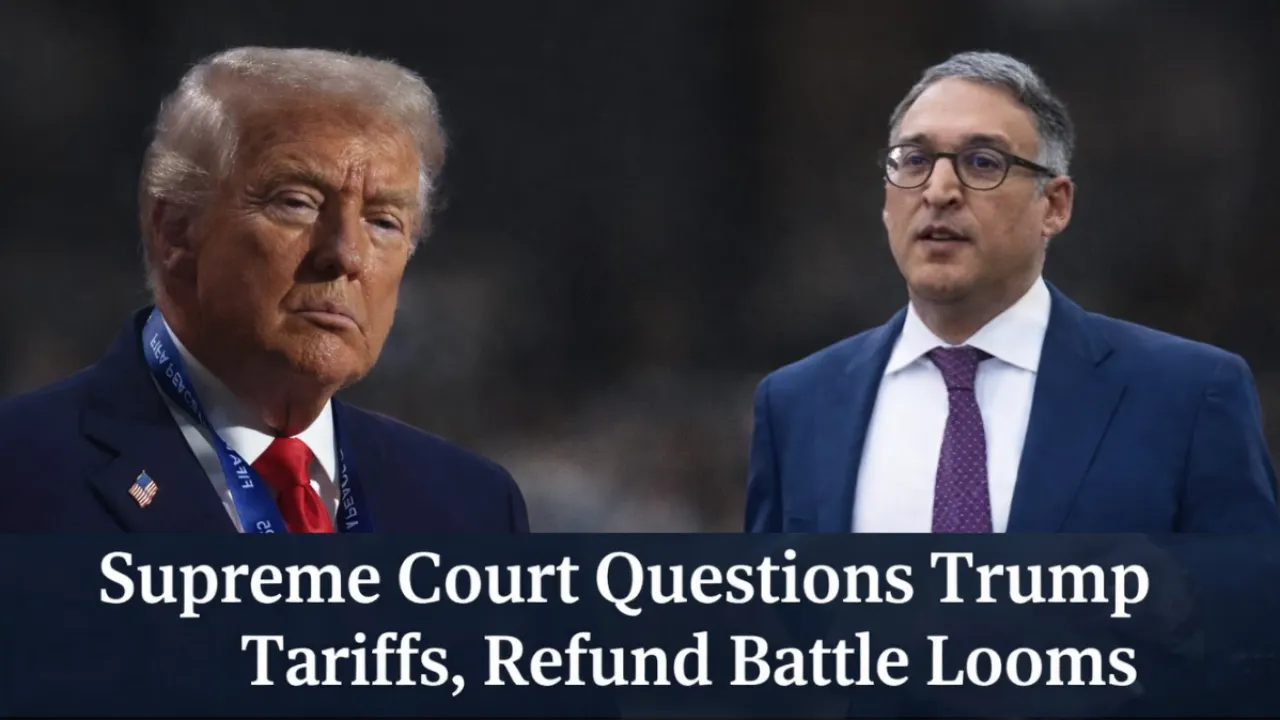
- 6-3 ruling questions executive tariff powers
- 133 billion dollars collected under dispute
- Neal Katyal forms special legal team
- Refund path faces legal and procedural hurdles
In his second term, President Donald Trump made tariffs his biggest weapon to create pressure in global trade negotiations. Due to this policy, tensions increased in business relations with several countries and import-export was affected. But now the US Supreme Court, through a major verdict, has put a question mark on that entire strategy.
By a 6-3 majority, the court held that the way the Trump administration imposed broad tariffs under the International Emergency Economic Powers Act, that is IEEPA, was outside the constitutional limits. The court made it clear that the power to impose taxes fundamentally lies with Congress and the executive cannot impose it on its own. This decision has put a halt to the policy that the Trump administration considered the foundation of its economic strategy.
Will the tariff money now be returned?
As soon as the verdict came, the first and biggest question that arose was whether the businesses and importers who paid this additional tariff in recent years will now get relief. On this issue, senior lawyer of Indian origin and former Acting Solicitor General of the United States, Neal Katyal, has come forward.
On February 23, Katyal announced the formation of a special legal team. He said that in the original case a demand for refund was not made because it was expected that after the verdict this process would start on its own. But if the federal government hesitates in returning the money, then a separate legal fight will be pursued on this. Katyal clearly said that every necessary step will be taken to secure the rights of the affected parties.
What did the court finally say?
In its verdict, the Supreme Court also said that the administration used emergency economic powers beyond their defined scope. The judges reiterated that decisions related to taxes and tariffs fall within the jurisdiction of the legislature. This comment once again drew a clear line on the limits of the executive.
The Trump administration had first implemented a broad tariff of 10 percent, which was later increased to 15 percent. Katyal has also raised questions over the validity of this 15 percent global tariff. His argument is that if any policy is in national interest, then it must be implemented in accordance with the Constitution, not by bypassing Congress.
133 billion dollars collected, but the path is not easy
It is estimated that about 133 billion dollars were collected through these tariffs. But the return of this amount will not be a simple process. This matter is linked to the US Customs and Border Protection agency and may have to pass through several procedural complexities in the International Trade Court and lower courts.
The biggest complication is who actually bore the real burden of the tariff. At the time of import, the duty was paid by companies, but the increased prices ultimately went out of the pockets of consumers. In such a situation, if the matter reaches the stage of refund, then who will receive this money—importers, companies, or consumers—there is no clear answer yet. Direct payment to consumers is considered administratively very difficult.
Meanwhile, the governors of Illinois and Nevada have raised the demand to provide relief to families in their respective states. They say that these tariffs affected the everyday lives of ordinary people and this should be seriously considered.
Who is Neal Katyal?
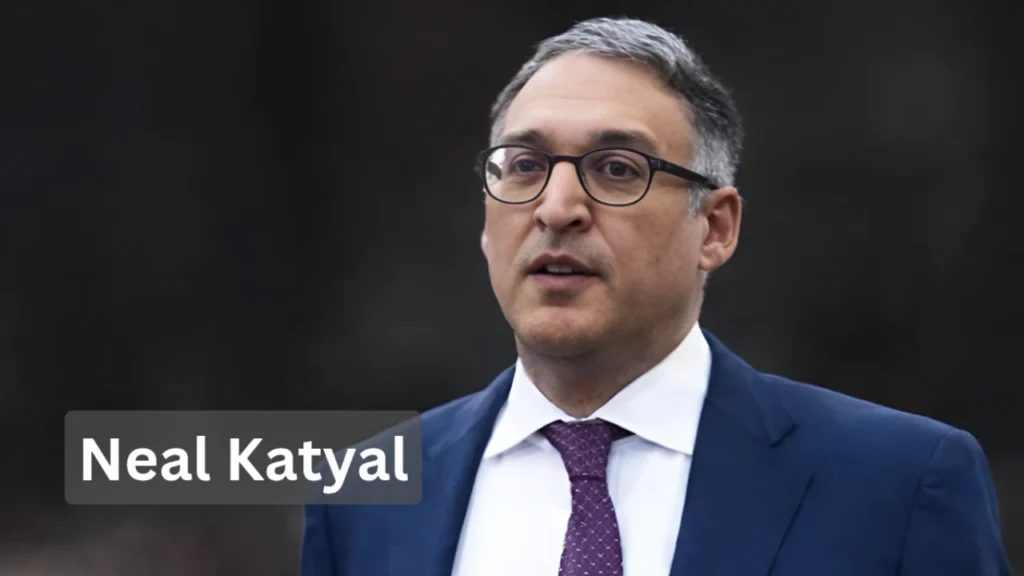
In this entire development, the role of Neal Katyal has been central. Katyal, of Indian origin, was born on March 12, 1970, in Chicago. His parents went to the United States from India—his mother remained associated with the medical field and his father was an engineer. He studied at Dartmouth College and earned a law degree from Yale Law School. After that, he worked as a clerk with Supreme Court Justice Stephen Breyer.
In 2010, President Barack Obama appointed him as Acting Solicitor General. Katyal has argued more than 50 cases in the Supreme Court so far, which is considered a notable achievement for a lawyer coming from a minority background.